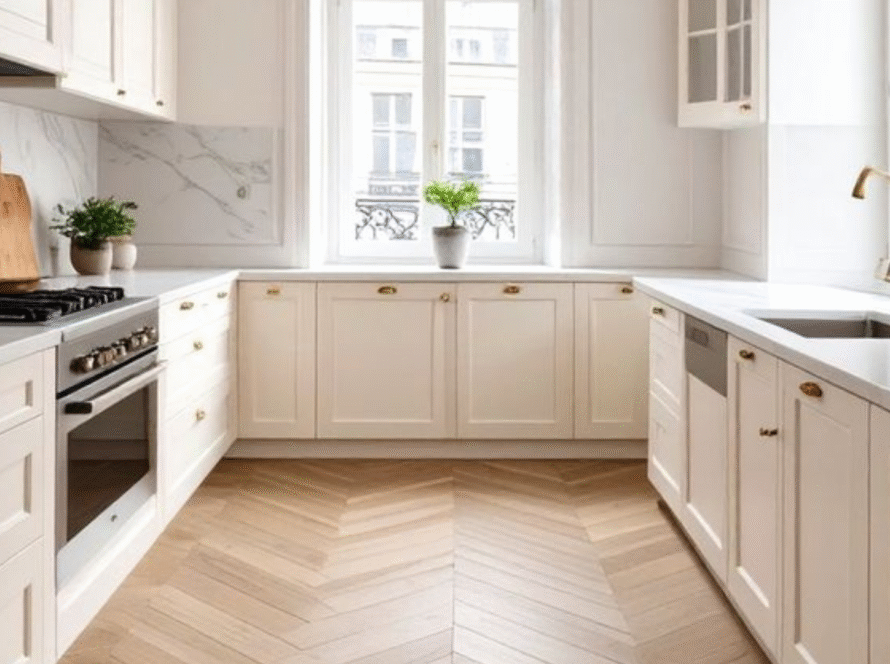
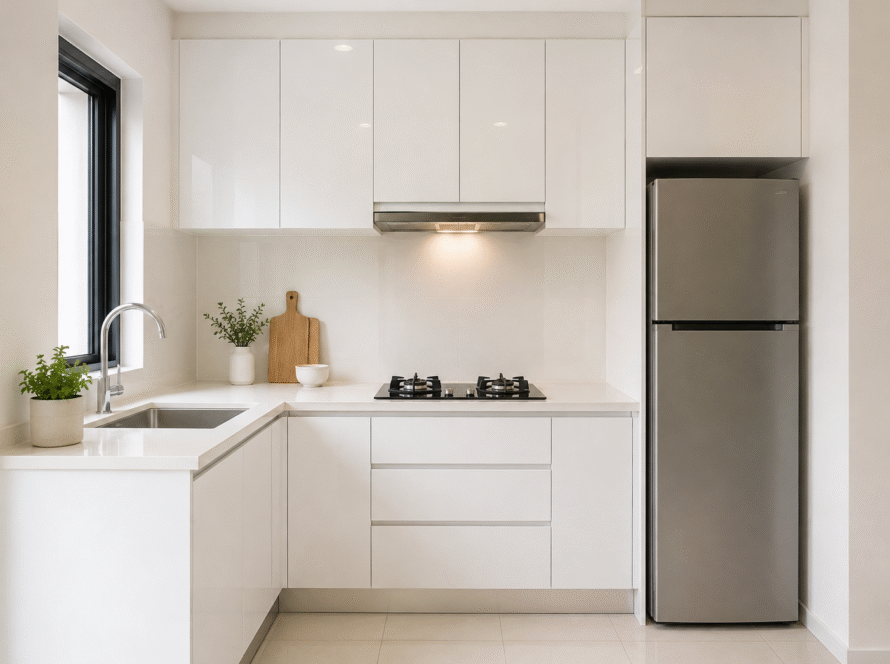
Designing a kitchen is not just about aesthetics. It is about functionality, durability, workflow, and long-term value. As a company with decades of experience in kitchen interior design services in Malaysia, EverKitchen understands that homeowners often ask one important question first: how much does kitchen interior design really cost in Malaysia?
This comprehensive guide will help you understand the pricing structure, cost factors, and smart budgeting strategies for kitchen interior design in Malaysia in 2026 — so you can plan with confidence rather than guesswork.
- Basic kitchen interior design — RM8,000 to RM20,000. Laminate cabinets, simple countertop, sink, and essential fittings for small or rental kitchens.
- Premium kitchen interior design — RM32,000 to RM60,000+. Custom cabinets, quartz or sintered stone countertops, and built-in appliances.
- High-end full renovation — RM80,000 to RM150,000+. Large landed homes or luxury kitchens with hacking, rewiring, plumbing relocation, and extensive carpentry.
- Material and customisation choices — aluminium cabinets, premium finishes, and custom layouts — significantly increase cost compared to basic laminate kitchens.
- Kitchen pricing is rarely "per square foot" — most providers quote by scope, quality standard, and defined deliverables.
- Saving on cabinet structure, countertop quality, wiring, and waterproofing leads to higher long-term repair costs — these are not areas to cut.
How Much Should You Pay for Kitchen Interior Design in Malaysia?
There is no fixed price for kitchen interior design in Malaysia — because no two kitchens are truly identical once you factor in layout, existing site conditions, access limitations, and finishing expectations. Some homeowners assume everything is calculated by square feet, but kitchen work is often priced differently. Many firms use a round cost or fixed price model because the kitchen build is driven by quality standards, a defined scope, and a concept of layout or generic modules that allow a more stable quotation.
A useful way to think about your 2026 budget is to map your kitchen into three layers:
Cabinets, countertop, backsplash, and basic sink area. This is the most visible and typically the largest cost component in any kitchen interior design project.
Plumbing, electrical, lighting points, and any mechanical needs like hood ducting or ventilation. Often underestimated but heavily influences the final cost and long-term safety of the kitchen.
The complexity of the style, special storage systems, islands, tall units, and appliance integration. The more tailored your design, the more this layer grows — and the more the overall quotation reflects it.
Essential functionality. Basic cabinets, laminate countertop, sink, hob and hood. Suitable for small condos, studio apartments, or rental properties with minimal layout changes.
Higher-end surfaces, sintered stone or quartz countertops, PU spray finishes, custom island, and integrated appliances. Stronger craftsmanship and more intentional design planning.
Large landed homes or luxury kitchens. Includes hacking, rewiring, plumbing relocation, extensive carpentry, and premium finishing across all surfaces and trades.
Basic Kitchen Design: RM8,000 to RM20,000
A basic kitchen design sits around RM8,000 to RM20,000 in 2026, and is often suitable for small apartments or homeowners who want to refresh an old kitchen without changing the overall structure. In this range, the scope usually focuses on essential functionality — basic cabinets, a laminate countertop, a sink, and a simple hob and hood pairing depending on your selected package and your kitchen's existing condition.
Layout changes are minimal, plumbing points generally stay where they are, and electrical work is limited to what is necessary to support basic usage. This range works well if your goal is a tidy, functional kitchen that is easy to maintain — especially in condos, studio units, and compact homes where space efficiency matters more than layered design statements.
Premium Kitchen Interior Design: RM32,000 to RM60,000+
A premium kitchen interior design solution typically starts around RM32,000 and can reach RM60,000+ in 2026, particularly when you choose more durable materials and a more customised look. This range often includes higher-end surfaces such as sintered stone countertops, PU spray finishes for a smoother and more seamless appearance, custom island features, and integrated appliances for a cleaner built-in aesthetic.
This price level also reflects stronger craftsmanship expectations — better alignment, better finishing, better installation handling, and more detailed quality control. If your kitchen is part of a larger renovation or you want your kitchen to feel like a centrepiece of the home, this is often the range where a kitchen interior design project starts delivering that "designed" effect rather than a simple upgrade.
What Drives Kitchen Interior Design Pricing in Malaysia?
Material selection is the clearest reason why kitchen interior design prices vary so widely. For kitchen cabinets, homeowners commonly compare melamine and solid wood — both viable, but in different pricing bands. Even within the same category, quality ranges from standard to premium to high-end. Workmanship quality is tightly linked: a PU spray finish or precision-built cabinet demands controlled processes, accurate measurement, and stable installation. Cleaner lines, tighter reveals, smoother finishing, and long-term door reliability all carry a cost.
Property access affects labour and logistics, which then affect cost. High-rise condos may require booking lifts, following strict delivery windows, protecting common areas, and managing hacking approvals. These constraints can increase manpower needs and extend timelines. Landed houses often allow easier movement of materials and better working flexibility, which can reduce some logistical overhead — even if the overall scope is larger.
Services are consistently underestimated during early budgeting, but they can heavily influence the final number. Electrical work might include adding plug points, separating circuits for higher load items, improving lighting points, or updating older wiring for safety. Plumbing work might include shifting sink points, upgrading piping, or planning drainage more cleanly. A lower quotation may appear attractive until you realise service items are excluded or only partially covered.
Design complexity influences cost because it changes time, skill, and the number of people involved. Modern classic design — with decorative profiles, layered finishing, and trim alignment — requires more steps and more patience. Minimal design is usually the lowest cost because it reduces decorative components and simplifies finishing steps. Hacking and demolition can increase your total cost drastically compared to projects focused on built-in furniture and surface upgrades only. The difference between built-in and custom kitchen cabinets is a major factor here.
Estimated Cost Range by Property Type
| Property Type | Typical Size | Estimated Range (RM) | Key Considerations |
|---|---|---|---|
| Studio / Small Condo | 400 – 700 sq ft | RM20,000 – RM50,000 | Compact design and space optimisation. High-rise access may require lift booking, fixed delivery windows, and common-area protection. |
| Mid-size Condo | 800 – 1,200 sq ft | RM40,000 – RM120,000 | Often includes broader renovation elements, built-ins, and furniture integration. Condo rules and hacking approvals may add coordination cost. |
| Landed House | 1,500 – 3,000 sq ft | RM80,000 – RM250,000+ | Larger carpentry scope. Kitchen may integrate dining zones, wet and dry kitchen separation. Easier access typically reduces logistical overhead. |
| Luxury / Semi-D / Bungalow | Varies | RM150,000 – RM500,000+ | Premium finishes and custom design with comprehensive renovation scope. Higher detailing standards and larger coordination requirements across multiple trades. |
Where to Save — and Where Not To
If you are planning your kitchen interior design budget carefully, you can control costs by choosing smarter spending categories rather than cutting everything uniformly. The key is to match where you invest with where it actually matters long term.
- Lighting fixtures — A well-planned combination of general and task lighting can look premium without requiring expensive designer fixtures. Simple positioning matters more than expensive fittings.
- Feature walls — A single well-executed feature wall adds character economically, especially when cabinetry and countertop already carry the main visual weight.
- Vinyl SPC flooring — A cost-effective upgrade in renovation contexts where you want a clean improvement without heavy hacking.
- Laminate countertops — A sensible choice for light kitchen use when cooking intensity is low and maintenance simplicity is a priority.
- Cabinet structure — Choosing a stronger internal structure such as plywood is a smarter long-term decision. The kitchen is a high-usage zone with repeated opening and closing and heavy storage loads.
- Countertop quality — The countertop takes direct contact with heat, water, cutting, and daily cleaning chemicals. A poor countertop choice leads to early swelling, staining, or edge breakdown.
- Electrical wiring — Kitchens run multiple appliances, and modern households add more devices over time. Safe wiring and correct circuit planning reduce risks and long-term maintenance costs.
- Waterproofing — Water issues do not stay small. Leaks and seepage can damage cabinets, flooring, and neighbouring units. The cost of fixing water-related problems can far exceed what you saved initially.
Contractor vs Kitchen Interior Designer — What Is the Difference?
Homeowners often compare hiring a contractor directly versus hiring a kitchen interior designer in Malaysia. The difference is not only about pricing — it is about what you are paying for and what kind of support you want throughout the renovation process.
With a contractor, you mainly pay for the execution of the job. With a designer, you pay for execution plus an additional service fee that covers planning, coordination, and quality control. This also means the designer is accountable for ensuring the work is completed in good condition and aligned with the agreed vision — acting as a form of after-sales assurance for the total outcome.
| Comparison | Kitchen Contractor | Kitchen Interior Designer |
|---|---|---|
| What you pay for | Labour, materials, and installation based on agreed scope | Execution plus planning, coordination, and quality control from start to finish |
| Pricing structure | Often item-based — additional plug points, hacking, tiling, or carpentry charged as separate line items | More comprehensive quotation that includes design scope and project oversight |
| Planning and layout | Practical suggestions may be provided, but the focus is to execute what is requested | Focuses on layout planning, workflow, storage strategy, and translating lifestyle needs into a clear plan |
| Trade coordination | You may need to coordinate multiple parties yourself | Acts as middle person coordinating contractors, suppliers, manufacturers, and electricians |
| Quality control | Based on the contractor's internal checks — follow-up varies by agreement | More structured quality control — designer ensures work matches agreed design, finish, and vision |
| Issue resolution | Between you and the contractor — you may need to follow up directly for fixes | Designer manages problem-solving and pushes for improvements on your behalf |
| Communication | Direct with each trade — faster but more moving parts to manage | One main contact for the whole project — keeps everyone aligned |
| Best for | Homeowners with a clear plan who are comfortable managing coordination themselves | Homeowners who want a guided end-to-end process with stronger alignment to a design vision |
Why Choose EverKitchen for Your Kitchen Interior Design
When you invest in a kitchen interior design solution, you are not only paying for cabinets and surfaces. You are paying for the experience of planning, the reliability of execution, and the confidence that your kitchen will work well for years. At EverKitchen, our approach focuses on practical design decisions, durable material planning, and consistent coordination — so your kitchen is not only beautiful, but efficient and comfortable to live with.
Our team of 120 specialists covers design planning, site measurement, carpentry production, installation coordination, and finishing. That team depth matters because a kitchen project is rarely just one trade.
Experience helps us anticipate what can go wrong before it becomes expensive, and guide homeowners toward realistic choices — whether a clean minimal condo kitchen or a premium statement kitchen with island and integrated appliances.
We cover wet work, electrical and mechanical coordination, and customisation for kitchen cabinets — reducing the need to manage multiple vendors separately. When the same team oversees design and execution, you get fewer mismatches and a clearer path to completion.
A good kitchen should not force uncomfortable cashflow decisions. Our 0% interest 12-month instalment plan helps homeowners upgrade confidently while keeping monthly budgets manageable.
EverKitchen packages start from RM9,388 for 10 ft to 14 ft layouts, including up to RM4,500 in complimentary Rubine kitchen appliances. Get the quality and value your kitchen deserves without the upfront financial pressure. View all kitchen cabinet packages →
Not Sure Where to Start? Let's Plan It Together.
A consultation helps you translate your lifestyle needs into a clear scope — avoiding hidden costs and expensive changes mid-renovation. Visit our showrooms in PJ, Subang Jaya, or Kajang, or speak to us on WhatsApp.
Chat With Our Kitchen Design ExpertsFrequently Asked Questions
What is the average kitchen interior design price in Malaysia for 2026?
Most basic kitchen upgrades start around RM8,000 to RM20,000, while premium kitchens commonly range from RM32,000 to RM60,000+. High-end full renovations for larger landed homes can exceed RM80,000 to RM150,000+. Final pricing depends on materials, workmanship, design complexity, and whether plumbing or electrical work is required. No two kitchens are priced identically because no two kitchens — or sites — are truly the same.
Why do two kitchens with similar sizes have different prices?
Size is only one factor. Costs change based on cabinet material, countertop type, hardware, workmanship standard, design complexity, and site conditions like condo access rules or hacking requirements. A kitchen with the same square footage can produce dramatically different quotations depending on whether you choose melamine or aluminium cabinets, laminate or sintered stone countertops, and whether any plumbing or electrical relocation is needed.
Is a kitchen interior design solution priced by square feet?
Not always. Many providers quote by scope, layout, and quality standard rather than pure square footage. Fixed packages are common for standard kitchen layouts, while custom designs are usually quoted based on materials, detailing complexity, and services required. To compare quotations accurately, ask all vendors to provide a fully itemised breakdown rather than a single lump sum — without that, you cannot tell what is and is not included.
What should I not save on in a kitchen renovation?
Avoid cutting costs on cabinet structure (opt for plywood over particle board for longevity), countertop durability (the surface takes the most daily abuse), electrical wiring (kitchens run multiple appliances and need correct circuit planning), and waterproofing (water issues do not stay small, especially in high-rise units). These items affect safety, long-term performance, and repair risk in high-usage kitchens — the money you save initially almost always costs more to fix later.
Should I hire a contractor or a kitchen interior designer in Malaysia?
A contractor focuses on execution of what you specify. A designer provides planning, coordination, and quality control from start to finish — acting as the single accountable point for the whole outcome. If you have a clear plan and are comfortable coordinating trades yourself, a contractor can work well. If you want a guided end-to-end process, better alignment to a design vision, and someone to manage issues when they arise, a designer typically delivers better overall value despite a higher upfront service fee.
How can I make sure I do not go over budget on my kitchen renovation?
Lock in your scope, materials, and design before signing anything — changes after fabrication begins are expensive. Always request a fully itemised quotation that lists what is and is not included. Build a contingency budget of 10 to 15% for site surprises. Be strategic about where you save (lighting fixtures, flooring choice, countertop for light-use areas) and consistent about where you invest (cabinet structure, electrical wiring, waterproofing). A free consultation with our team can help you map out a realistic scope before any commitments are made.