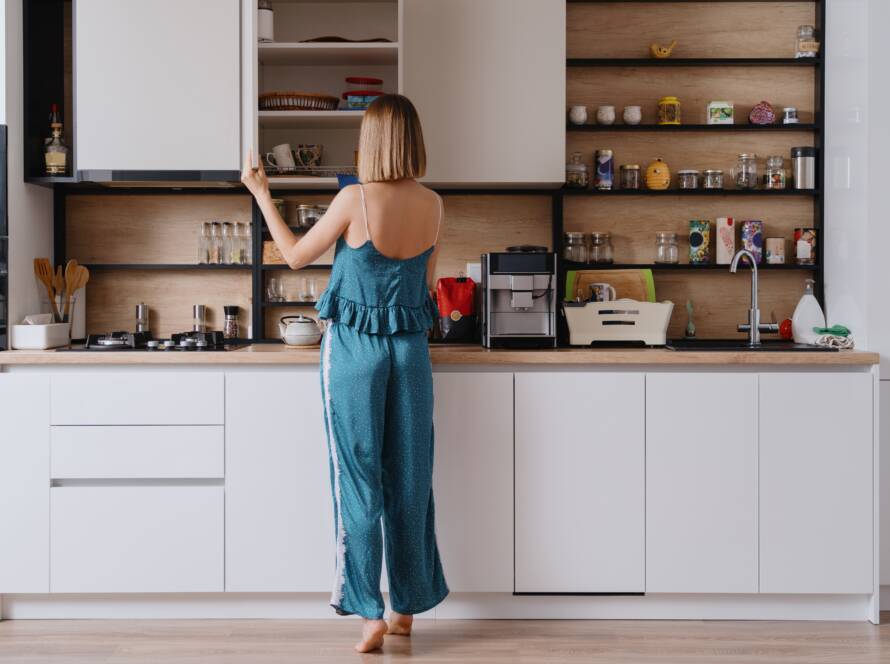
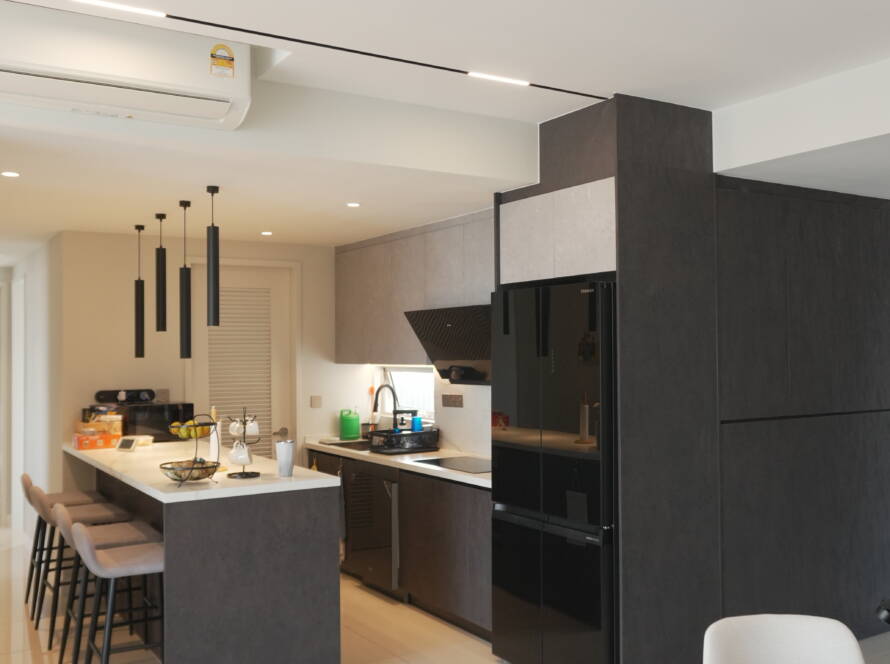
Most homeowners only discover what they should have added to their kitchen cabinets after the renovation is done. Not during the quote review. Not during the 3D design session. After. When the cabinets are installed, the kitchen is functional — and the daily frustrations slowly begin.
After working on thousands of kitchen projects across Malaysia, we have heard the same regrets repeatedly. The good news: every single item on this list can be specified before fabrication at a fraction of what it would cost to add or retrofit later. Read this before you finalise your kitchen design.
- Most cabinet features that homeowners regret skipping are inexpensive to add during the design stage — but very costly or impossible to add after installation.
- Soft-close hinges and drawer runners are the single most impactful hardware upgrade for daily kitchen comfort.
- Pull-out drawers and organisers make more difference to daily usability than almost any aesthetic decision.
- Corner wasted space — through magic corners or LeMans trays — is the most common structural regret in L-shaped and U-shaped Malaysian kitchens.
- Under-cabinet lighting and a tall pantry unit consistently appear on the list of features homeowners wish they had included.
- All of these features should be specified at the design stage — not added as afterthoughts once fabrication has started.
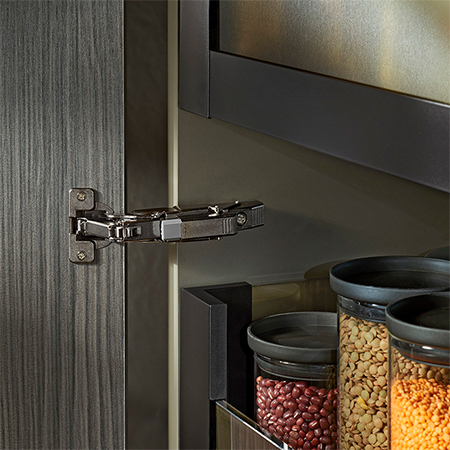
This is the most universal regret across all kitchen projects regardless of budget. Homeowners who chose standard hinges to save cost consistently mention it within months of moving in. Every door slam, every drawer bang — amplified in an enclosed kitchen — becomes an annoyance that compounds with time.
Soft-close hinges and drawer runners use a hydraulic damping mechanism to slow the door or drawer in the last 30 degrees of closing — so it never slams. The result is a kitchen that feels premium, quieter, and more considered. Premium brands like Blum and Hettich are tested to 100,000+ open-close cycles, meaning the mechanism will outlast your cabinet finish. The cost difference between standard and soft-close is typically RM20 to RM80 per unit — a trivial amount over the life of the kitchen.
In Malaysian homes with children, the benefit compounds further — slammed cabinet doors are a noise, safety, and wear issue that soft-close eliminates entirely.
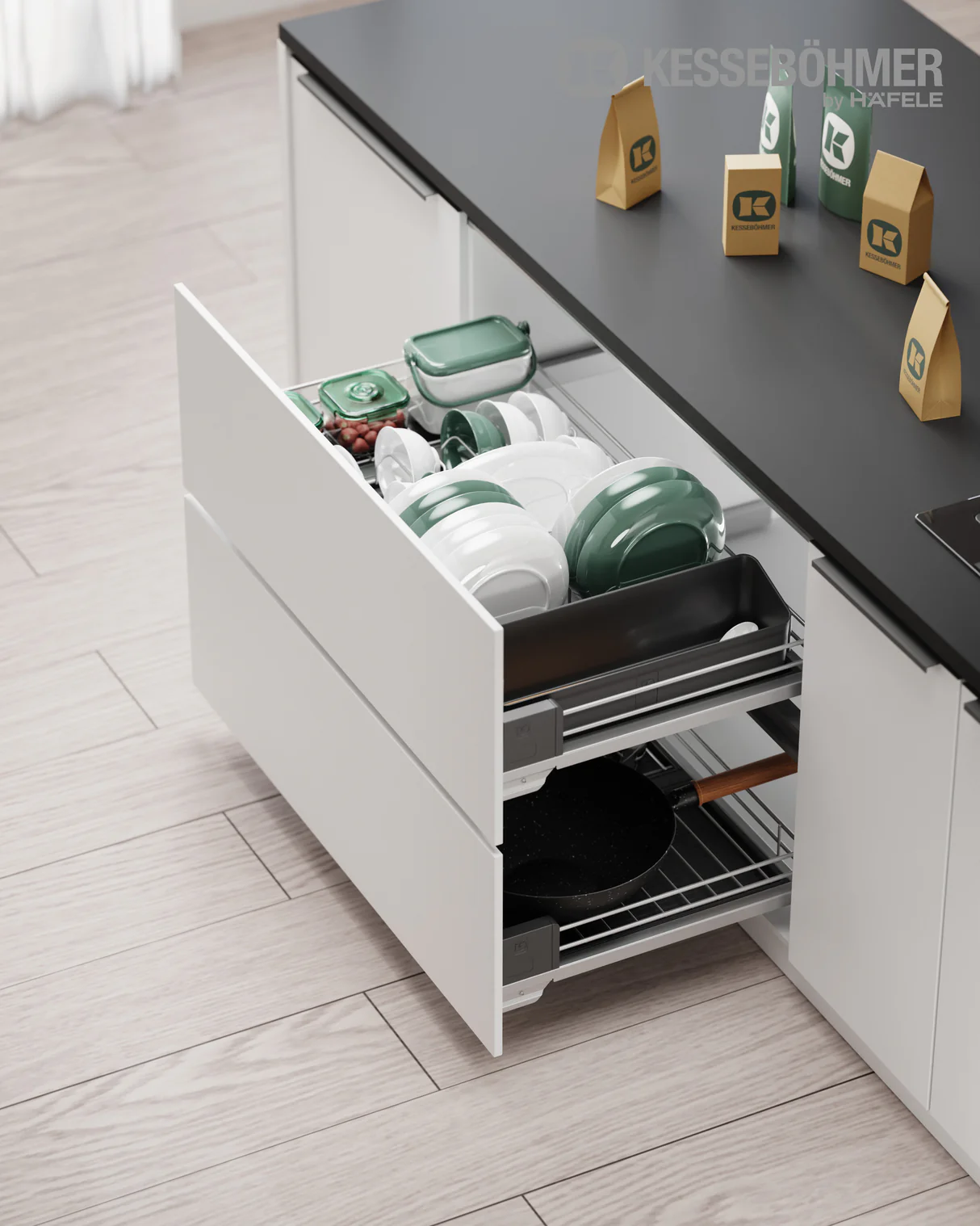
Standard base cabinets with a door and fixed shelf are the default in most budget kitchens. And they are genuinely inconvenient. To access items at the back — pots, mixing bowls, appliances — you have to crouch, reach, and rummage. In a kitchen you use daily, this adds up to a significant daily friction point.
Pull-out drawers replace the door-and-shelf configuration with a full-extension drawer that brings everything to you. All items become immediately visible and accessible without bending or reaching. This is especially valuable for pots and pans storage, food pantry areas, and anywhere you store frequently used items.
The reason homeowners skip this is cost — pull-out drawer systems cost more than fixed shelves. But the productivity and convenience improvement justifies it significantly for high-use zones. At minimum, specify pull-out drawers for the two or three base cabinets you use most often.
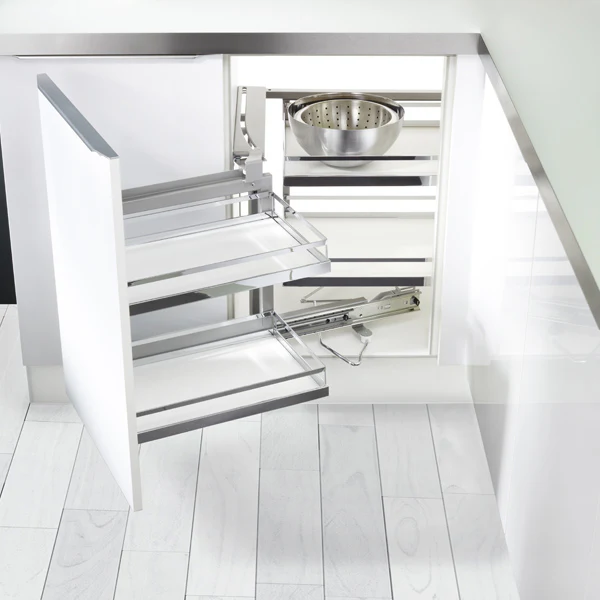
In L-shaped and U-shaped kitchens — which represent the majority of Malaysian landed home and condo kitchen layouts — the corner cabinet is almost always dead space. The depth of the corner makes items at the back completely inaccessible without crawling in on your hands and knees. Most homeowners store rarely-used items there and effectively write off a significant chunk of cabinet volume.
A Magic Corner or LeMans tray system transforms this completely. When the cabinet door opens, the front basket swings out and the rear basket slides forward simultaneously — bringing everything to the cabinet opening within arm's reach. The mechanism is smooth, silent, and completely changes how usable the corner becomes.
This is one of the features that generates the strongest positive reaction from homeowners who specified it — and the strongest regret from those who did not. It should be standard in any L-shaped or U-shaped kitchen design.
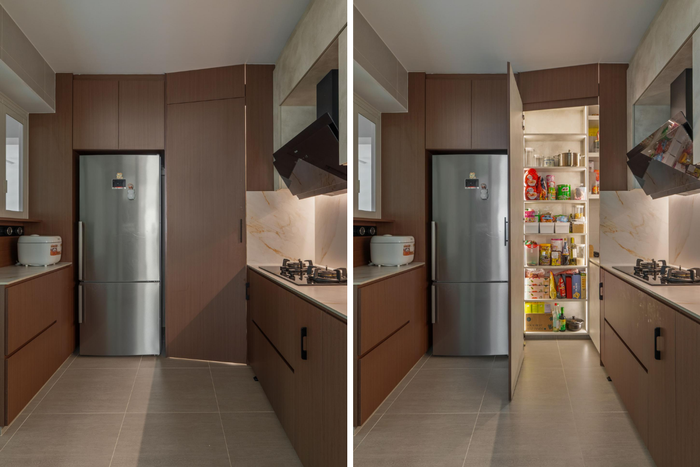
A tall unit pantry is a full-height cabinet column — typically 2,100mm to 2,400mm — designed as a dedicated food and dry goods storage zone. It maximises vertical space rather than floor space, which is critically important in Malaysian kitchens where countertop and floor area are always at a premium.
Inside a well-designed pantry unit, you can store everything from rice and cooking oil to cereals, snacks, dried goods, and small appliances — all visible and accessible without digging through base cabinets. Many homeowners describe the tall pantry unit as the feature that finally made their kitchen feel organised and under control.
The regret of not including it is particularly common in smaller condo kitchens where food storage becomes a constant challenge after move-in. If your kitchen layout has space for a single full-height column — even just 300mm to 400mm wide — a pantry unit there will be one of the most used and appreciated elements in your kitchen.
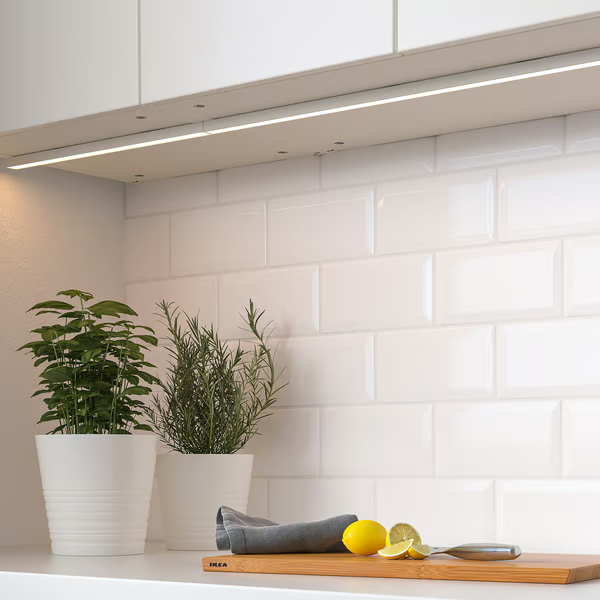
Most kitchens rely on a single ceiling light as the primary light source. The problem: when you stand at the countertop to prepare food, your body blocks the ceiling light and puts your working surface in shadow. You are cutting vegetables in the dark — which is both inconvenient and genuinely unsafe.
Under-cabinet LED strips solve this completely. Mounted beneath the upper cabinets and pointed down at the countertop, they provide bright, even, shadow-free task lighting directly where food preparation happens. The quality of the light on the countertop improves dramatically — and the overall kitchen feels brighter, warmer, and more premium.
The critical timing issue: under-cabinet lighting requires wiring to be in place before cabinets are installed. Once the upper cabinets are fixed to the wall, adding wiring later requires significant rework. This is a feature that must be planned and wired during the renovation — not added as an afterthought. Confirm the wiring point with your contractor before installation begins. Read more about lighting planning in our kitchen renovation checklist.
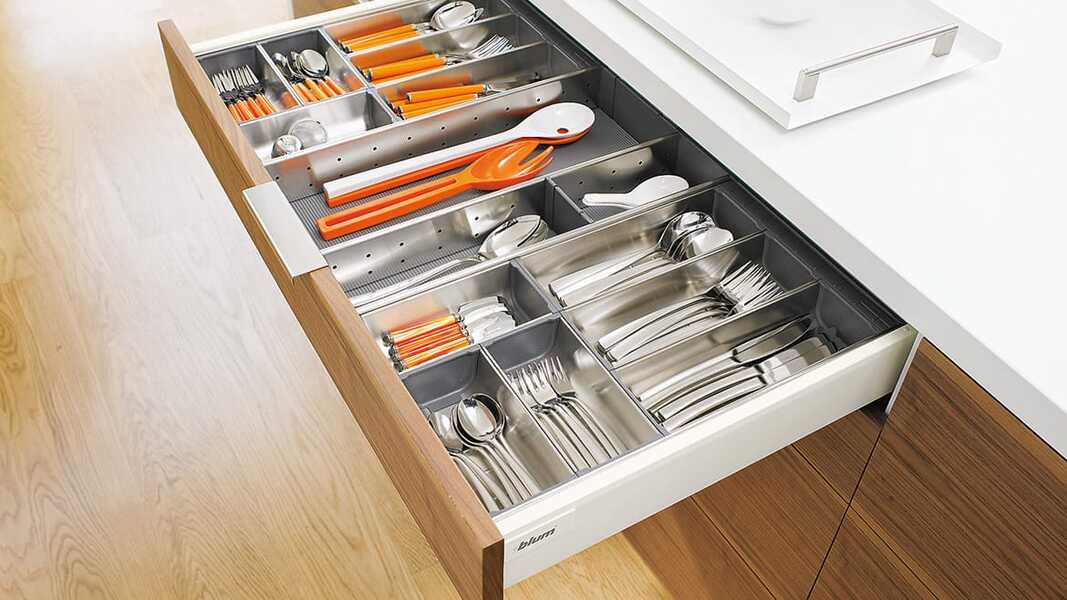
A drawer without internal organisation quickly becomes a mixed pile of utensils, chopsticks, takeaway menus, and mystery items. Even homeowners who invested in good pull-out drawers sometimes skip the internal organiser and regret it — because the drawer becomes chaotic within weeks of use.
Drawer dividers and built-in cutlery trays give every item a designated home. The result is a kitchen where you can find what you need immediately — not after a minute of rummaging. Custom-height dividers can be specified to fit deep drawers for pots and pans, standard drawers for utensils and cutlery, and shallow drawers for spice jars and small tools.
This is one of the most cost-effective upgrades available. Specifying internal organizers at the design stage allows them to be sized and fitted precisely to the drawer interior — a much better result than buying aftermarket organisers later that never quite fit correctly.
Standard upper cabinets stop at a height of around 2,100mm to 2,200mm — leaving a gap between the top of the cabinet and the ceiling. In Malaysian kitchens, this gap is a grease and dust trap. Cooking oil and steam settle in that space and are difficult to clean. Most homeowners discover this problem within the first few months of cooking and have no easy solution.
Full-height cabinets extend all the way to the ceiling, eliminating the gap entirely. The top section above standard reach is perfect for storing items used infrequently — large festive pots, seasonal items, extra appliances, bulk dry goods. You gain approximately 30% more total storage volume without increasing your kitchen footprint by a single centimetre.
The visual benefit is equally significant — a continuous cabinet surface from counter to ceiling creates a clean, seamless, professionally designed look that significantly elevates the kitchen's overall aesthetic.
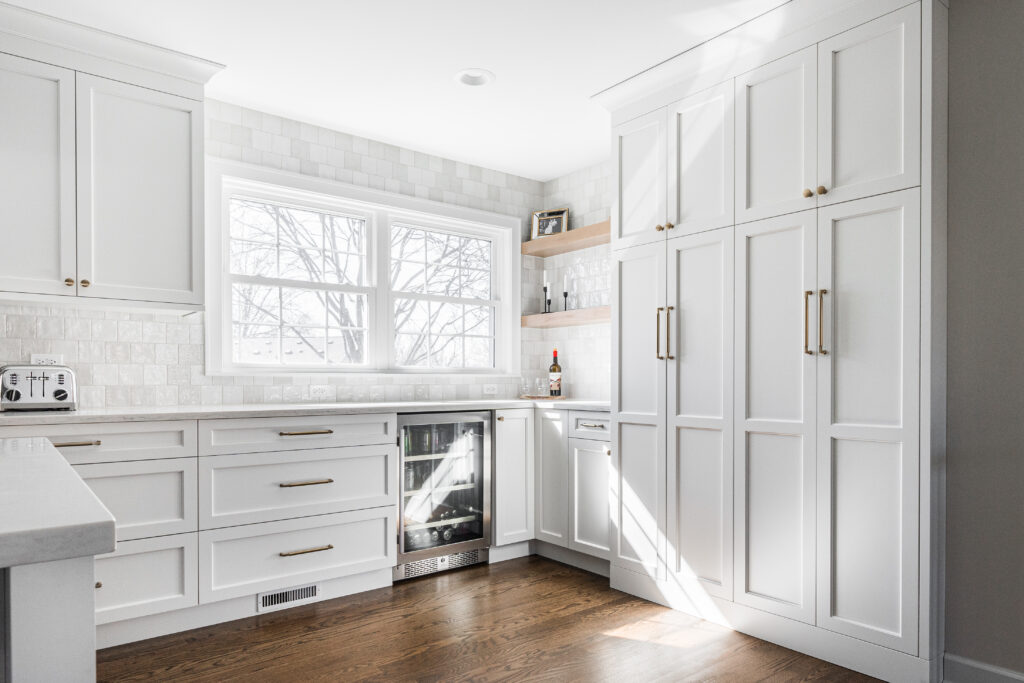
A free-standing bin on the kitchen floor is a constant obstacle — it gets in the way when you open base cabinet doors, collects grease and odours, and never quite fits anywhere neatly. A built-in pull-out bin system solves this entirely. The bin cabinet door opens with the bin attached, slides out for use, and closes cleanly — completely hidden when not in use.
Modern pull-out bin systems can accommodate multiple bins for waste segregation — an increasingly relevant consideration as Malaysian municipalities implement waste separation requirements. Dual-bin configurations allow you to separate recyclables from general waste in a single hidden cabinet.
The under-sink or adjacent-to-sink position is the most convenient placement, as it is the closest to where food preparation and waste disposal happens. Specifying this at the design stage allows the cabinet to be sized and configured precisely for the bin system — a custom fit that aftermarket solutions cannot match.
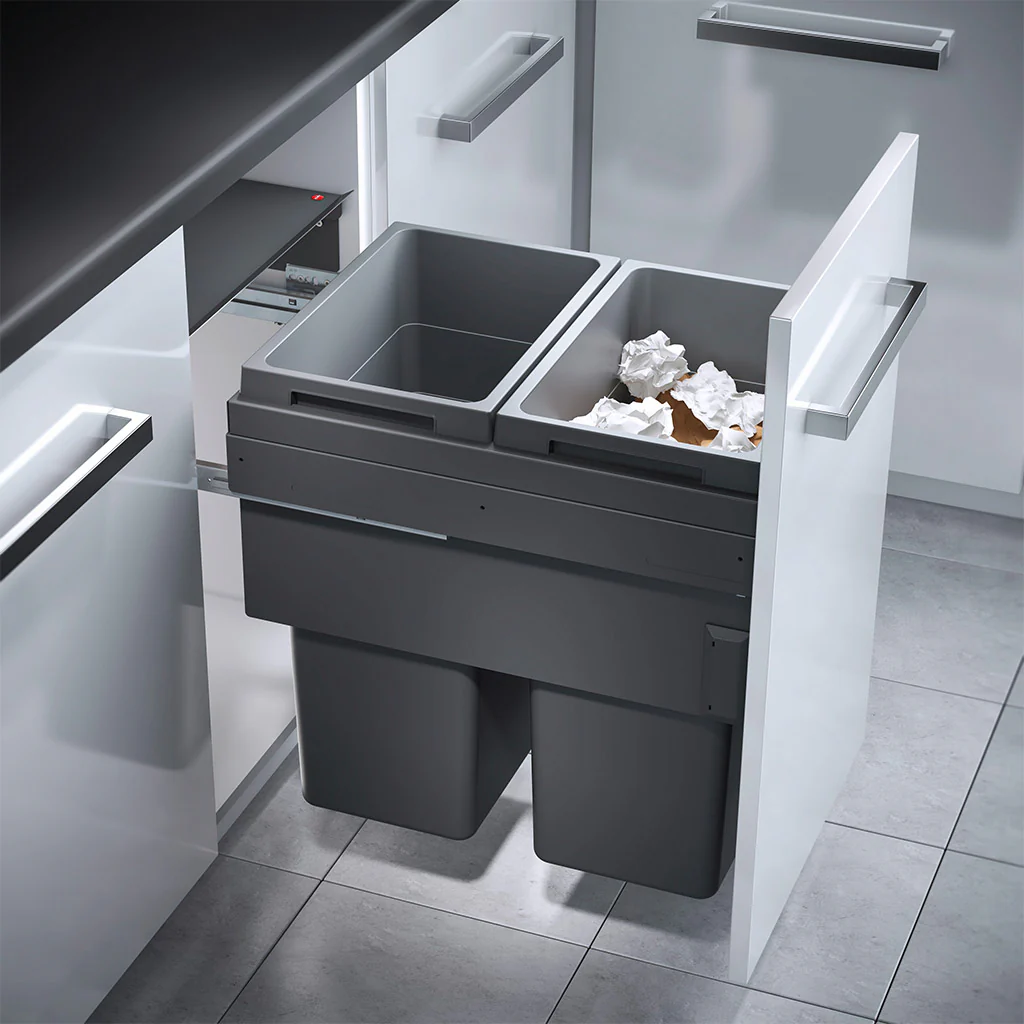
Malaysian cooking — with its broad range of spices, sauces, and condiments — creates a unique storage challenge. Most homeowners either pile spices in a deep base cabinet (impossible to find anything), line them across the countertop (cluttered and greasy), or store them in an upper cabinet (taking up shelf space and hard to reach while cooking).
A narrow pull-out spice rack — typically 100mm to 150mm wide — fits between the stove and a larger cabinet and provides a dedicated, visible, and immediately accessible home for your most-used spices and sauces. Vertical tray racks in base cabinets similarly provide dedicated storage for baking trays, cutting boards, and oven trays that otherwise get stacked horizontally and require unpacking everything to reach the item at the bottom.
These narrow pull-out systems maximise awkward slim spaces that standard cabinet modules cannot use effectively — turning what is usually a gap or filler panel into genuinely useful storage.
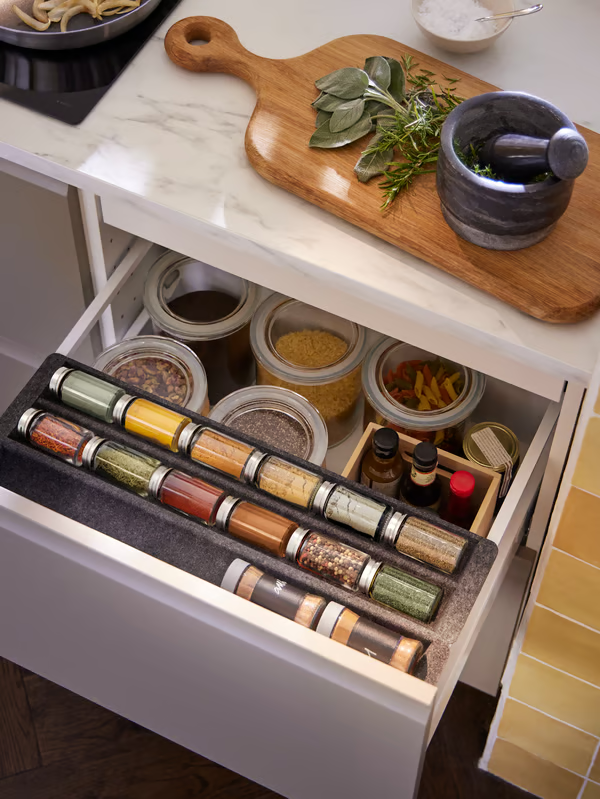
The toe-kick is the recessed area at the base of your kitchen cabinets — typically 100mm to 150mm high and running the full length of the cabinet run. In most kitchens, this space is completely empty and enclosed by a decorative panel. This is a significant amount of volume being wasted across a full kitchen.
Toe-kick drawers convert this space into shallow storage drawers — accessed by pressing or lifting a panel that slides out horizontally. They are ideal for storing flat items that are used occasionally but take up valuable cabinet space: baking trays, pizza stones, cooling racks, placemats, and infrequently used serving items.
Because these drawers are rarely needed, their location at floor level is not a usability concern — you simply open them when needed, which is not often. But the storage volume they free up inside the primary cabinets is real and meaningful, especially in smaller Malaysian kitchens where every centimetre of storage counts.
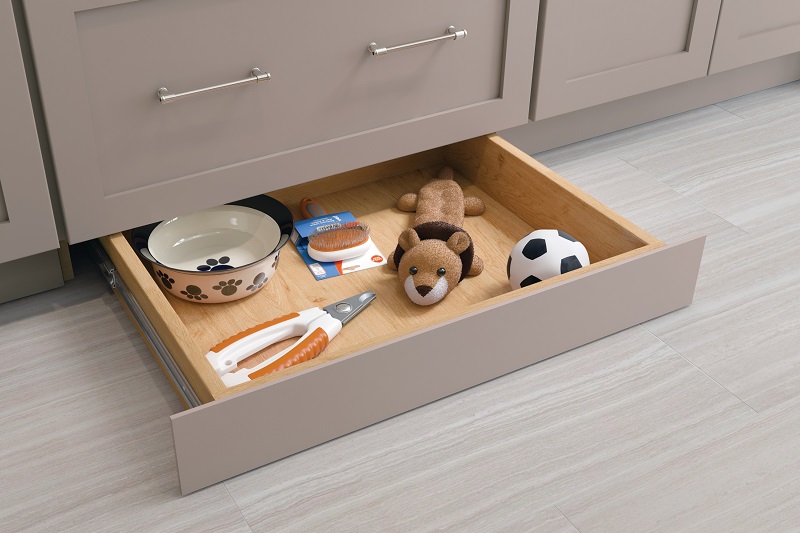
Quick Reference — All 10 Features at a Glance
| # | Feature | Cost at Design Stage | Priority | Best For |
|---|---|---|---|---|
| 1 | Soft-Close Hinges & Runners | Low — RM20–80/unit | ★★★★★ | All cabinet zones |
| 2 | Pull-Out Drawers (Base) | Medium — RM150–400/unit | ★★★★★ | Pots, pans, base storage |
| 3 | Magic Corner / LeMans Tray | Medium — RM400–900 | ★★★★☆ | L-shape & U-shape kitchens |
| 4 | Tall Unit Pantry | Medium — varies | ★★★★☆ | All types, especially condos |
| 5 | Under-Cabinet LED Lighting | Low — RM150–400 | ★★★★☆ | Countertop prep zones |
| 6 | Drawer Dividers & Organisers | Low — RM80–250/drawer | ★★★★☆ | Cutlery, utensils, spices |
| 7 | Full-Height Cabinets | Medium — extra material | ★★★☆☆ | All kitchen types |
| 8 | Pull-Out Waste Bin | Low–Med — RM200–500 | ★★★☆☆ | Under sink / prep zones |
| 9 | Spice Pull-Out / Tray Rack | Low — RM150–350 | ★★★☆☆ | Adjacent to hob, slim spaces |
| 10 | Toe-Kick Drawers | Low — RM120–300/drawer | ★★☆☆☆ | Small kitchens, flat items |
Designing Your Kitchen Soon?
Our team will walk you through every one of these features with real samples — so you can see and feel the difference before committing. Visit our showrooms in PJ, Subang Jaya, or Kajang, or chat with us on WhatsApp to start planning.
Chat With Our Kitchen Cabinet ExpertsFrequently Asked Questions
Which kitchen cabinet features are worth the extra cost in Malaysia?
Soft-close hinges and runners give the highest return on the lowest investment — every homeowner who upgrades to soft-close immediately notices the difference. Pull-out drawers for base cabinets are the second most impactful, particularly for pots and pans storage. If your kitchen has an L-shaped or U-shaped layout, a magic corner or LeMans tray for the corner cabinet is essential. Under-cabinet LED task lighting is also worth every ringgit and must be wired before cabinet installation.
Can I add these features after my kitchen cabinets are already installed?
Some features can be added after installation — drawer dividers, internal organisers, and toe-kick drawers can sometimes be retrofitted depending on the cabinet construction. However, features like magic corner systems, pull-out drawers, soft-close hardware for all units, and under-cabinet lighting wiring are extremely difficult and costly to add after the fact. In many cases, retrofitting requires partial or full cabinet disassembly. The strong recommendation is to specify all desired features before fabrication begins.
What is a magic corner and how does it work?
A magic corner is a pull-out storage system designed for blind corner base cabinets — the deep corner spaces in L-shaped and U-shaped kitchens that are usually inaccessible. When the cabinet door opens, the front basket swings outward and the rear basket slides forward simultaneously, bringing all items to the cabinet opening within arm's reach. It converts what is typically dead, unusable space into one of the most accessible storage zones in the kitchen. Brands like Hafele and Blum manufacture reliable magic corner systems commonly used in Malaysian kitchens.
Is soft-close worth paying extra for in Malaysian kitchens?
Absolutely. The cost premium for soft-close hinges and drawer runners is typically RM20 to RM80 per unit — a small amount relative to the total cabinet cost. The benefits are immediate and lasting: no slamming doors, reduced wear on cabinet frames, quieter kitchen environment, and a more premium feel to every interaction with the cabinet. Quality brands like Blum are tested to 100,000+ cycles — the soft-close mechanism will outlast your cabinet finish. This is the one hardware upgrade we recommend regardless of overall kitchen budget.
How do I decide which features to prioritise within a limited budget?
Prioritise in this order: first, soft-close hardware throughout (lowest cost, highest impact); second, pull-out drawers for your two or three most frequently used base cabinet zones; third, under-cabinet LED task lighting (must be wired before installation); fourth, a magic corner if your layout has blind corner cabinets; fifth, internal drawer organisers for cutlery and utensil drawers. Features 1 to 3 alone will transform the daily experience of your kitchen — and together typically add less than 10 to 15% to the total cabinet cost.