Renovating your kitchen sounds exciting — until you realise how many decisions you actually need to make. In Malaysia, many homeowners start with inspiration photos but end up facing budget overruns, poor layouts, and costly mistakes that are difficult to fix later. The issue is not the renovation itself. It is the lack of proper planning.
This kitchen renovation checklist is designed to help you plan every step with clarity — so you can avoid unnecessary costs, make better decisions, and create a kitchen that truly fits your lifestyle and cooking habits.
- A well-thought-out layout and clear usage needs make every design decision easier and prevent costly changes later.
- Cabinets impact storage, workflow, and budget — plan them early, not as an afterthought.
- In Malaysia's humid climate, the right materials prevent swelling, warping, and premature wear.
- Confirm appliances before finalising design — dimensions and ventilation requirements must be planned in advance.
- Electrical and plumbing points should be locked in early to avoid expensive rework mid-renovation.
- Smart storage features like pull-outs, soft-close hinges, and pantry units improve daily usability significantly.
- Proper lighting and ventilation make your kitchen comfortable to use, not just nice to look at.
- The right renovation partner with clear scope and proper planning helps avoid miscommunication and budget blowouts.
Step 1: Start With How You Actually Use Your Kitchen
Before thinking about design, materials, or contractors, take a step back. This is the stage most homeowners rush through — but it is also the one that determines whether your kitchen will actually work for you long term.
Start by understanding how you truly use your kitchen on a daily basis. Not how you wish it looked, but how you actually live.
- Do you cook daily or occasionally?
- Do you need more storage or more countertop space?
- Do you cook heavy meals — oil, wok, spices?
- Will multiple people use the kitchen at the same time?
- Do you need a separate dry and wet kitchen?
Step 2: Choose the Right Kitchen Layout
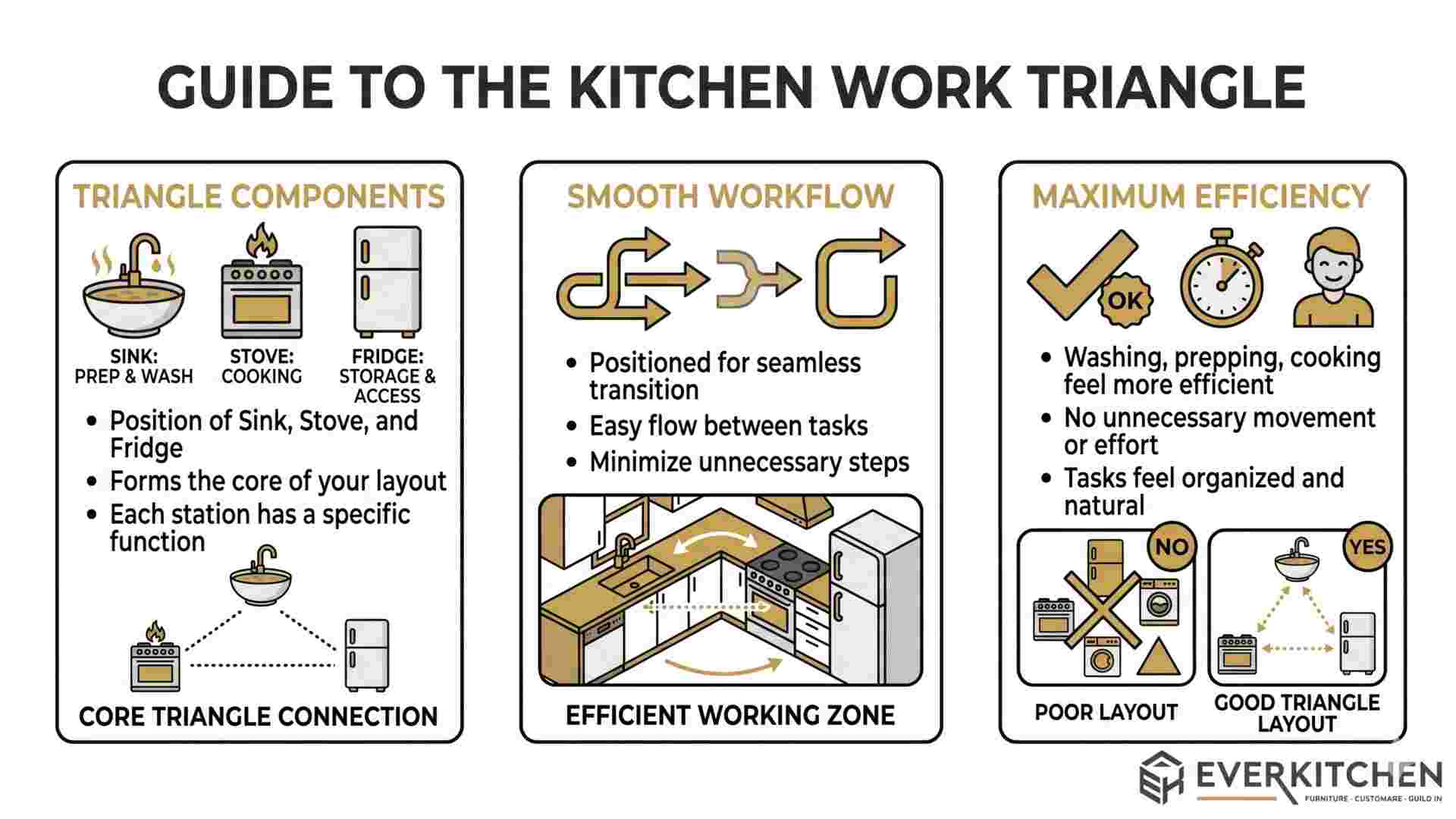
A well-planned layout turns a kitchen from something that just looks nice into one that is actually easy to use. When everything is placed properly, you move around less, reach things faster, and cooking feels smoother. But if the layout is not thought through, even a beautiful kitchen can quickly become frustrating.
One simple concept that helps is the kitchen work triangle — your sink, stove, and fridge should be positioned so that they form a smooth flow between them. This makes everyday tasks like washing, prepping, and cooking feel more efficient without unnecessary movement.
- L-shaped — versatile, suits most landed homes
- U-shaped — maximum storage and counter space
- Galley — efficient for narrow spaces
- Island layout — ideal for open-plan living areas
- Single wall — compact, suited for smaller condos
- Plan the layout before choosing colours or finishes
- Make sure cabinet heights suit the primary cook's height
- Leave enough walkway — minimum 90cm clearance
- Consider appliance door swing directions
- If space allows, separate dry and wet kitchen zones
Step 3: Set a Realistic Kitchen Renovation Budget
This is where most people underestimate. Many homeowners start with a rough number in mind, but do not realise how much scope, materials, and level of customisation can affect the final cost. Two kitchens that look similar in size can end up with completely different pricing — simply because of material choice, workmanship quality, and design detail.
| Budget Tier | Estimated Cost | What It Usually Includes |
|---|---|---|
| Basic | RM8,000 – RM20,000 | Basic cabinets, standard materials, minimal layout changes, simple appliances setup |
| Mid to Premium | RM32,000 – RM60,000+ | Custom cabinets, better materials, built-in appliances, more detailed design and finishing |
Budget Breakdown by Component
| Component | Estimated % | Notes |
|---|---|---|
| Cabinets | 40–60% | Largest cost — affects both function and overall look |
| Countertop / Tabletop | 10–20% | Material choice impacts durability and maintenance |
| Appliances | 15–25% | Depends on brand and built-in vs freestanding |
| Labour, Wiring & Plumbing | 15–25% | Installation, plumbing adjustments, and electrical work |
Where Most People Overspend
- Upgrading materials halfway through — switching to quartz or premium finishes mid-project
- Adding features last minute — pull-out trays, soft-close upgrades, lighting changes
- Changing the layout after work has started — this almost always triggers extra costs
- Underestimating how much cabinets actually cost relative to the total budget
For a full cost breakdown, read our guide on understanding kitchen interior design prices in Malaysia.
Step 4: Choose Materials That Suit Malaysia's Climate
Malaysia's humidity is a real factor in kitchen design. If you choose the wrong materials, you may start seeing swelling, warping, or surface wear much sooner than expected. Material selection directly affects how long your kitchen lasts and how much maintenance it needs — not just how it looks on day one.
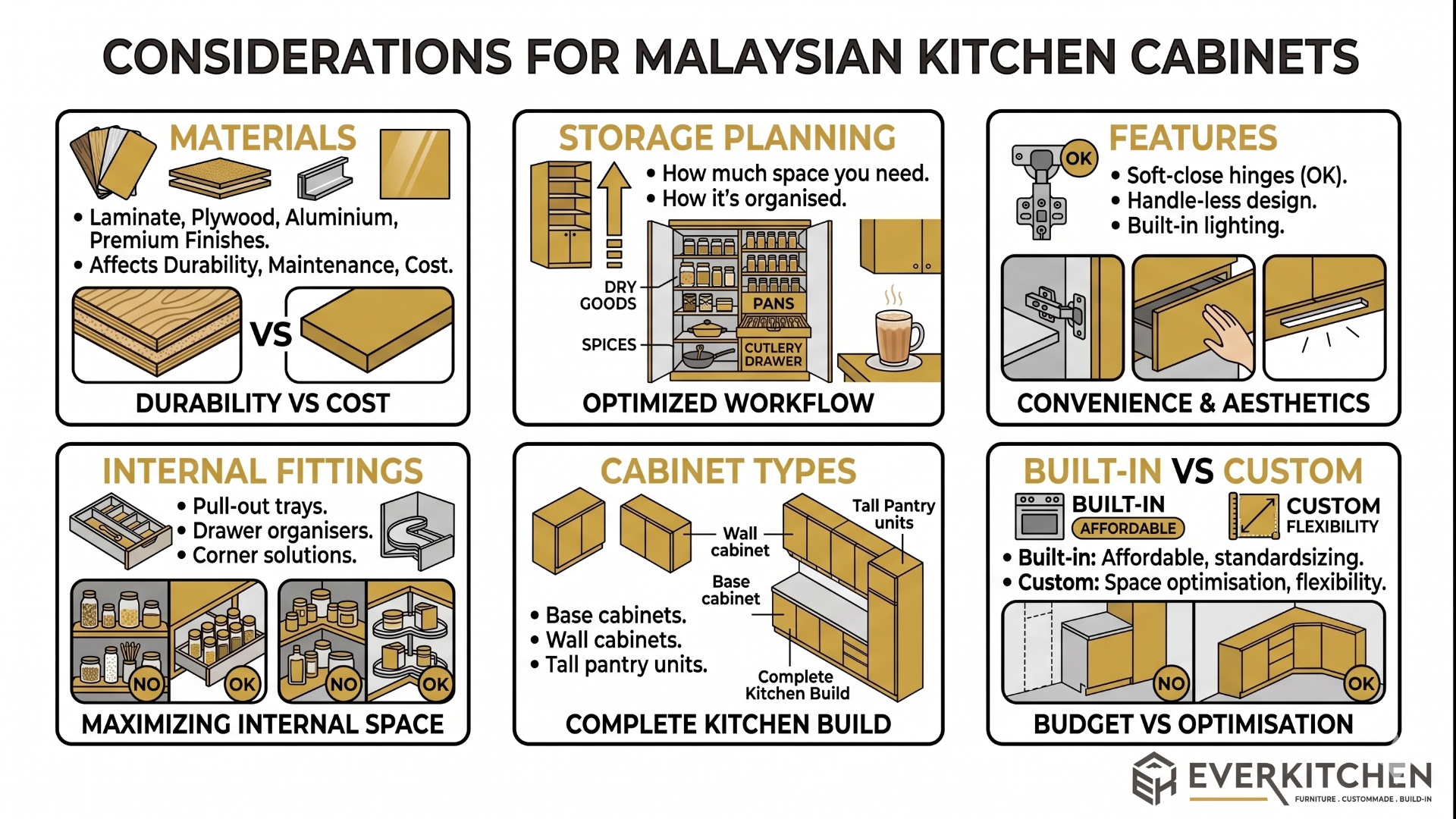
| Material | Best For | Humidity Resistance | Relative Cost |
|---|---|---|---|
| Melamine | Basic setups, dry kitchens | Moderate — avoid for wet kitchen use | Budget-friendly |
| Plywood | Most kitchen types | Good — reliable for long-term use | Mid-range |
| Aluminium | Wet kitchens, heavy-use areas | Excellent — termite, moisture and heat resistant | Premium |
| Stainless Steel | Wet kitchens, commercial-grade use | Excellent — industrial strength | Premium |
For a more detailed comparison, read our guide on built-in vs custom kitchen cabinets in Malaysia.
Step 5: Confirm Appliances Before Finalising Design
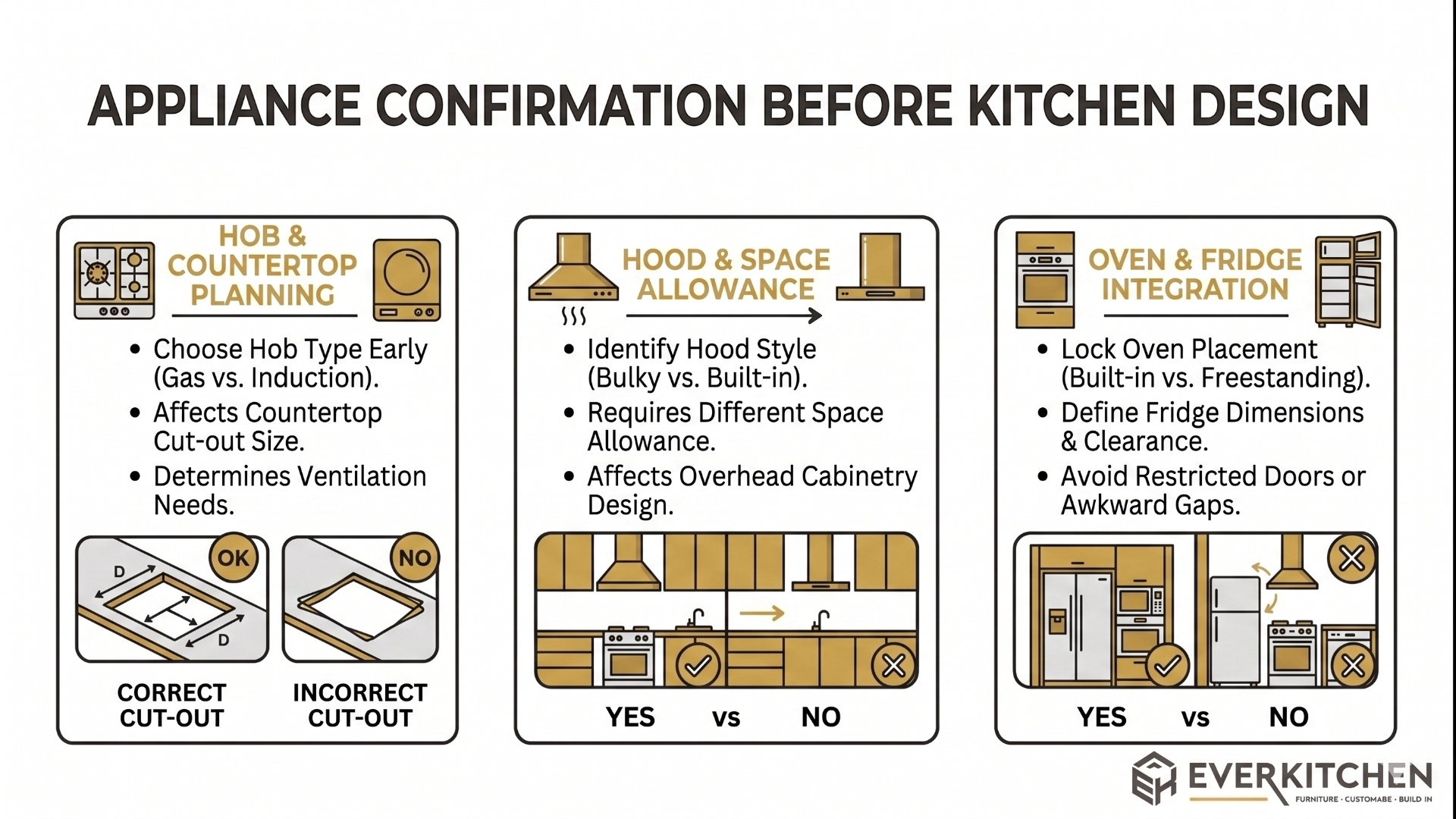
A very common mistake is designing the kitchen first, then picking appliances later. Appliances are not flexible — your design has to fit them, not the other way around. When appliances are decided too late, you end up with cabinets that do not fit properly, awkward gaps, or insufficient ventilation space. Fixing these usually means adjustments, extra cost, or compromises.
What to Confirm Early
- Hob type (gas or induction) — affects countertop cut-out dimensions
- Cooker hood model — different hoods need different cabinet space
- Built-in oven dimensions — must be integrated into cabinet from the start
- Fridge model and dimensions — not all fridges are standard sizes
- Wrong hob size = countertop needs to be recut
- Wrong hood = cabinet above may not accommodate the ducting
- Oven added after = no dedicated cabinet housing
- Fridge too wide = doors cannot fully open in the space
Step 6: Plan Electrical and Plumbing Points
This is one area that is easy to overlook at the start, but it can become quite costly if missed. Unlike design changes, electrical and plumbing points are built into the structure of your renovation. Once work begins, adjusting them usually means hacking walls, rework, and additional cost.
What to Confirm Before Work Starts
- Power points for appliances — enough sockets for oven, fridge, microwave, and small appliances, placed where you actually need them
- Dedicated circuit for the hob and hood — induction hobs and powerful cooker hoods need their own circuit
- Lighting setup — task lighting over prep areas and ambient lighting should be wired in before cabinets go up
- Water points — sink, dishwasher, and water filter positions need to align with your layout before any cabinet work begins
Step 7: Design Smart Storage From the Start
A kitchen can look great, but if storage is not planned properly, it becomes frustrating to use within weeks of moving in. The difference usually comes down to the details — not adding more cabinets, but thinking carefully about how things are stored and accessed.
Storage Features That Actually Make a Difference
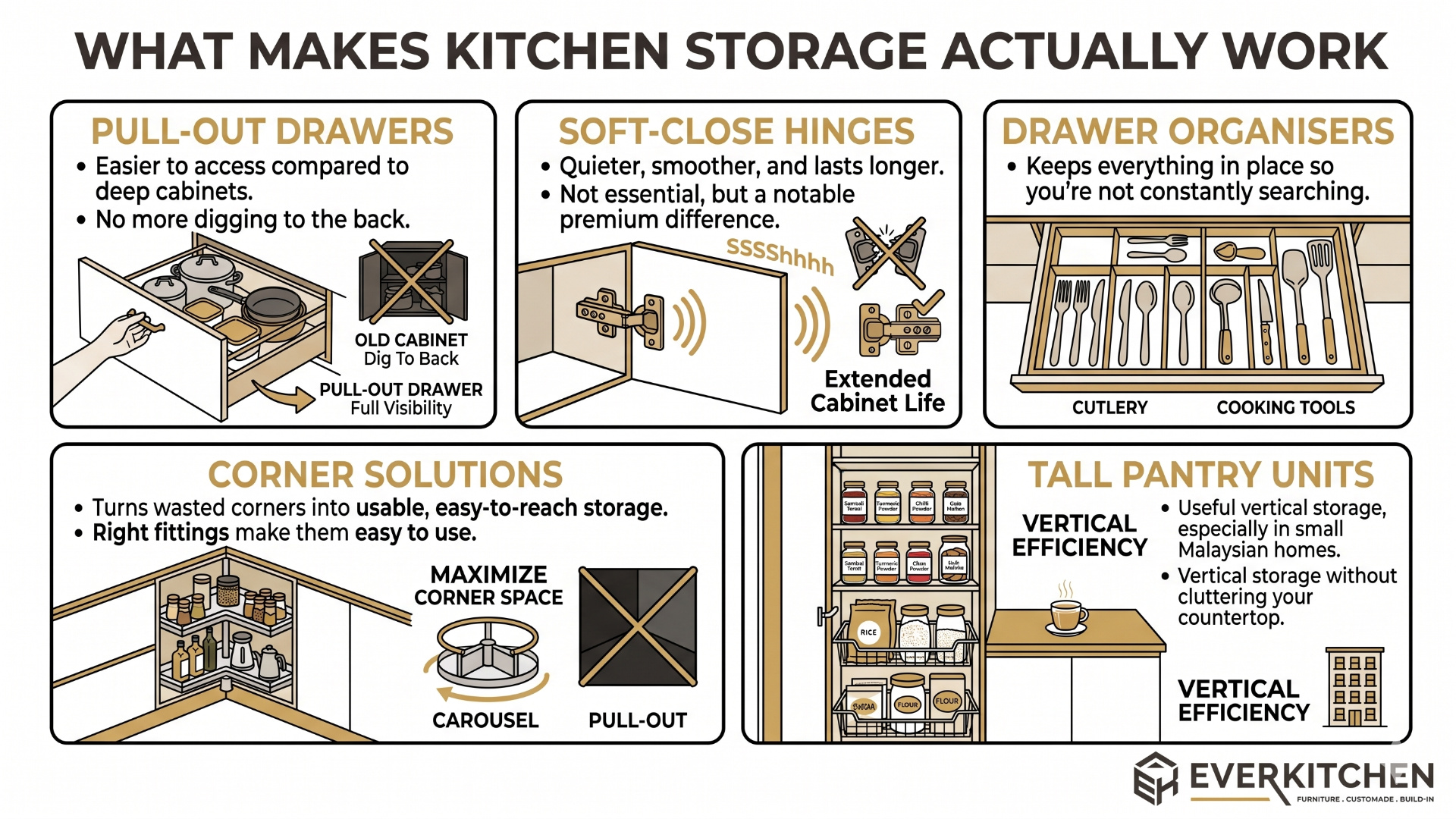
- Pull-out drawers — easier to access than deep base cabinets; no more digging to the back for a pot
- Soft-close hinges and drawer runners — quieter, smoother, and they last longer
- Drawer organisers — keeps utensils, cutlery, and spices in place so you stop searching
- Corner solutions — lazy susans or pull-out corner units turn wasted corner space into usable storage
- Tall pantry units — especially useful in Malaysian homes where kitchen floor space is limited; maximises vertical storage without cluttering the countertop
- Under-sink organisers — keeps cleaning supplies accessible and contained
Step 8: Plan Lighting and Ventilation
This is what makes your kitchen comfortable to use daily — not just nice to look at in photos. A lot of homeowners rely on a single ceiling light, which creates shadows across the countertop and makes food prep harder than it needs to be. Ventilation is equally critical in Malaysian kitchens where cooking intensity is high.
Lighting: Three Layers That Work Together
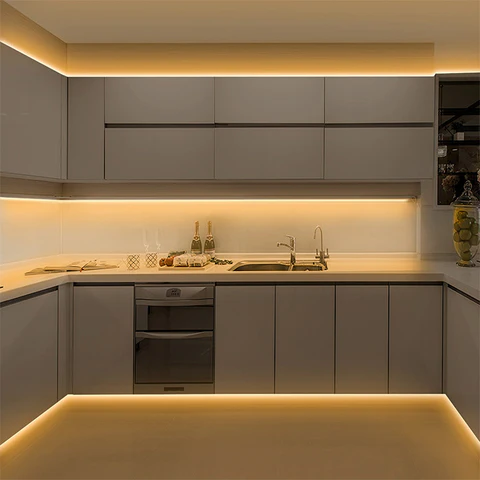
This is the light you actually use when cooking. The best option for Malaysian kitchens is LED strip lights mounted under upper cabinets — they provide bright, even coverage directly onto the countertop with no shadows.
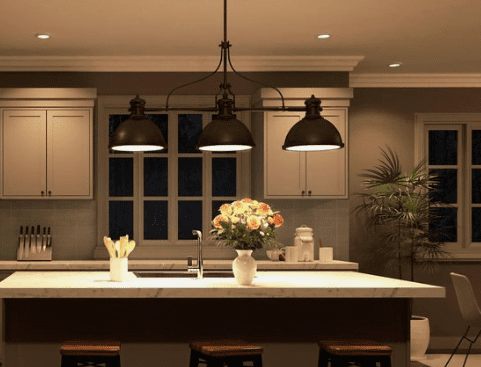
This lights up the whole kitchen. The best options are ceiling downlights or panel lights. Go for neutral white around 4000K for a clean, natural look. Avoid overly warm lighting — it can make food preparation harder to see clearly.
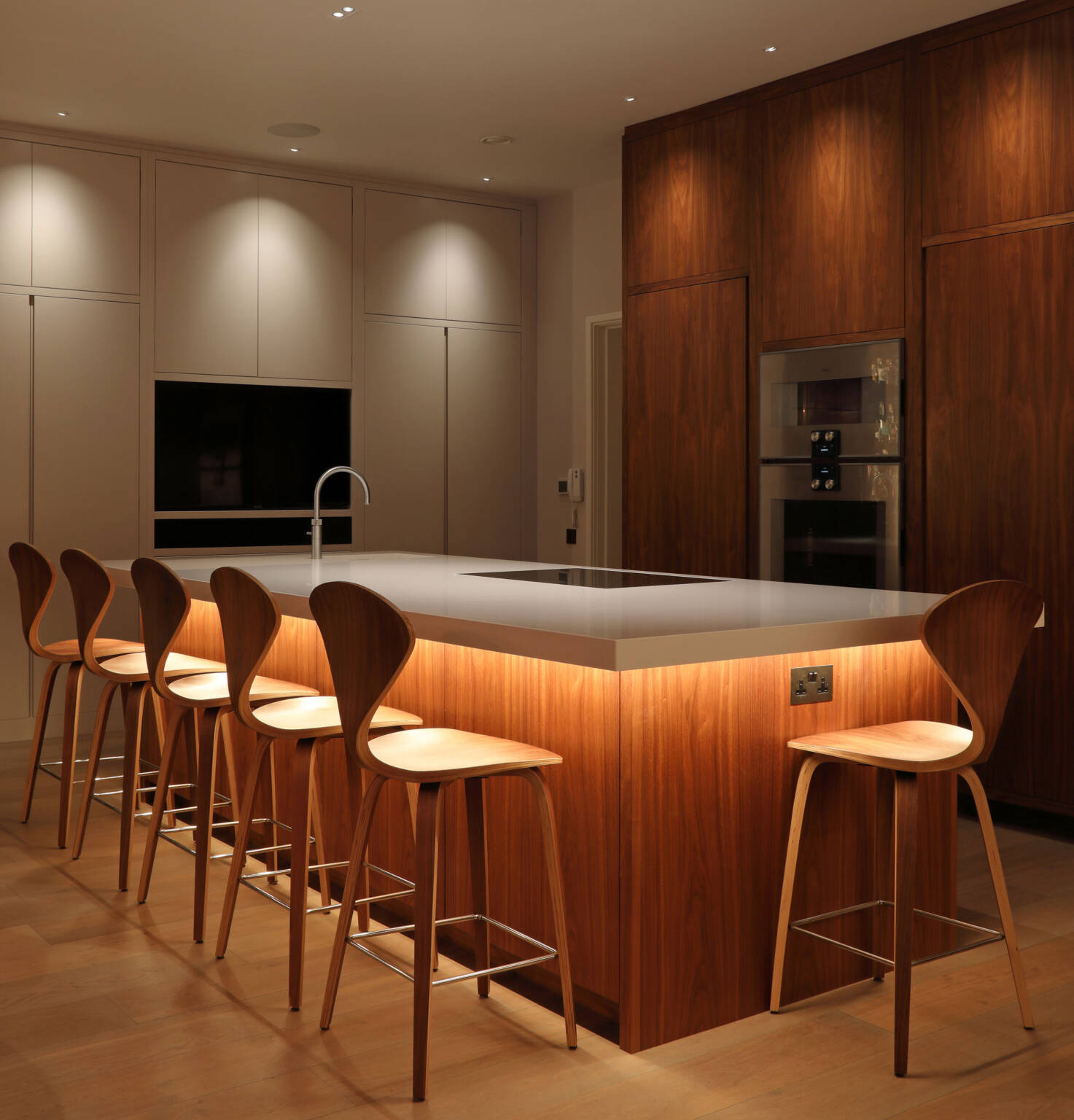
Optional but impactful — used in glass display cabinets, above open shelving, or under the kitchen island. Accent lighting adds depth and makes the dry kitchen feel more designed and intentional.
Ventilation: Do Not Compromise
In Malaysian kitchens, ventilation is not optional — it is essential. A poor cooker hood means grease and smoke accumulate on your cabinets, spread to the living area, and damage surfaces over time. When selecting a cooker hood, consider the extraction rate (m³/hr) relative to your kitchen size, and ensure the ducting route is planned before cabinet installation.
Step 9: Choose the Right Renovation Partner
The most detailed checklist in the world cannot save a renovation that is managed by the wrong contractor. In Malaysia, the renovation industry has a wide range of quality levels — from experienced specialists to generalist contractors who lack specific kitchen expertise.
When evaluating renovation partners for your kitchen, look for:
- A clear, itemised quotation — scope, materials, timeline, and payment terms all spelled out before work begins
- Kitchen-specific experience — not just general renovation; cabinet fabrication, plumbing integration, and appliance fitting require specific expertise
- A 3D design preview — you should be able to visualise your kitchen before any fabrication starts
- Site visits and measurements — any reputable kitchen specialist should visit your home and measure before quoting
- After-sales support — what happens if a hinge breaks or a cabinet warps six months after installation?
At EverKitchen Design, we work with Malaysian homeowners across Klang Valley, Seremban, and Johor Bahru to design kitchens that are tailored to how Malaysian households actually cook and live. Our projects balance clean aesthetics in the dry kitchen with practical durability in the wet kitchen — with full transparency on scope and cost before anything is signed.
Ready to Start Your Kitchen Renovation?
Get a free consultation and 3D design preview. View our completed projects or speak to our team today.
Chat With Our Experts on WhatsAppFrequently Asked Questions
How long does a kitchen renovation take in Malaysia?
A typical full kitchen renovation in Malaysia takes between 4 to 8 weeks from design confirmation to completion, depending on scope. Cabinet fabrication usually takes 2 to 4 weeks, with installation and finishing taking an additional 1 to 2 weeks. If hacking, plumbing, or electrical rework is involved, add time accordingly. Rushing the process is one of the most common causes of quality issues — plan your timeline realistically and confirm it with your contractor upfront.
What is the most important thing to plan in a kitchen renovation?
Layout comes first. A beautiful kitchen with a poor layout will frustrate you every day. Once the layout is right, material choice and cabinet design follow naturally. Most renovation regrets trace back to layout decisions that were made too quickly, based on aesthetics rather than how the space is actually used. Start with your daily cooking habits, then build the design around them.
What kitchen materials work best in Malaysia's humidity?
For cabinet carcasses, moisture-resistant plywood is the most reliable mid-range option. For wet kitchens, aluminium or stainless steel cabinets are the most durable long-term choice. For countertops, quartz and sintered stone perform best in Malaysian conditions. Avoid standard MDF or non-moisture-resistant melamine in wet kitchen environments — they swell and warp within a few years. Read our guide on built-in vs custom kitchen cabinets for a full breakdown.
Should I confirm appliances before or after designing the kitchen?
Always before. Your cabinet dimensions, countertop cut-outs, ventilation ducting, and hood housing all depend on your specific appliance models. If you finalise the design first, you may find that your chosen appliances do not fit or require expensive rework. Lock in your hob, hood, oven, and fridge model and dimensions before your kitchen design is drawn up.
How do I avoid going over budget during a kitchen renovation?
The most effective approach is to fix your scope and materials before signing anything. Budget overruns almost always happen through mid-project upgrades and changes — switching to a better countertop, adding pull-out fittings, or changing the layout after work has started. Get a fully itemised quote, decide your finishes upfront, and build a 10 to 15 percent contingency buffer into your total budget. For a detailed cost breakdown, read our kitchen interior design price guide.
Do I need a separate wet and dry kitchen for my landed home?
If you cook regularly using high heat, oil, or strong aromatics — the answer is almost certainly yes. A wet kitchen keeps grease and smoke contained, protects your dry kitchen cabinetry, and keeps your home smelling fresh. If you rarely cook or only do light meal prep, a well-ventilated single kitchen may be sufficient. Read our full guide on dry and wet kitchen layouts for Malaysian landed homes for more detail.
What type of lighting should I use in my kitchen?
Plan for three types: task lighting (LED strips under upper cabinets for countertop work), ambient lighting (ceiling downlights at around 4000K neutral white), and optional accent lighting for display cabinets or under-island strips. Task lighting is the most important — without it, your countertop will be in shadow whenever you stand in front of the upper cabinets. All lighting positions should be wired before cabinet installation begins.