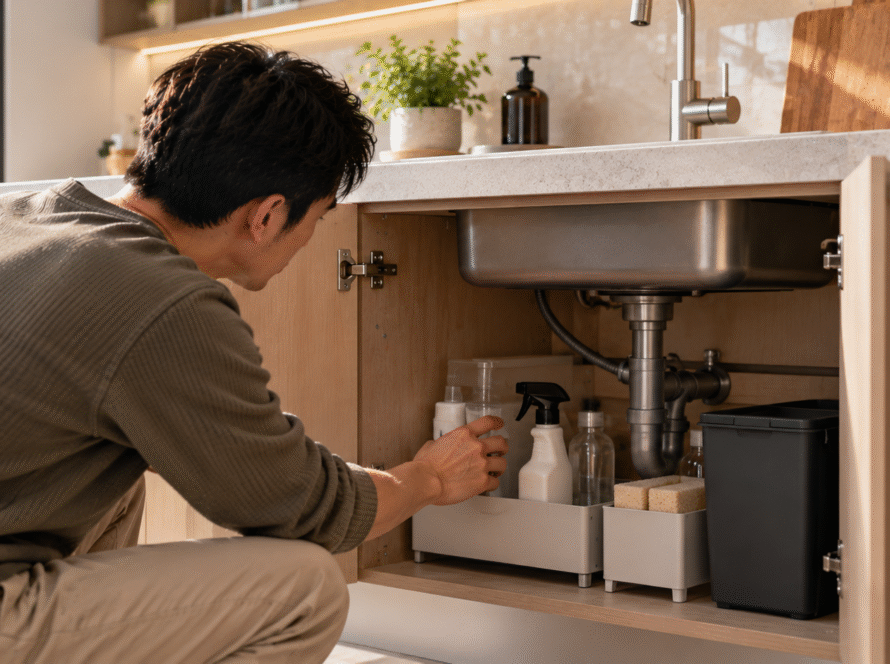
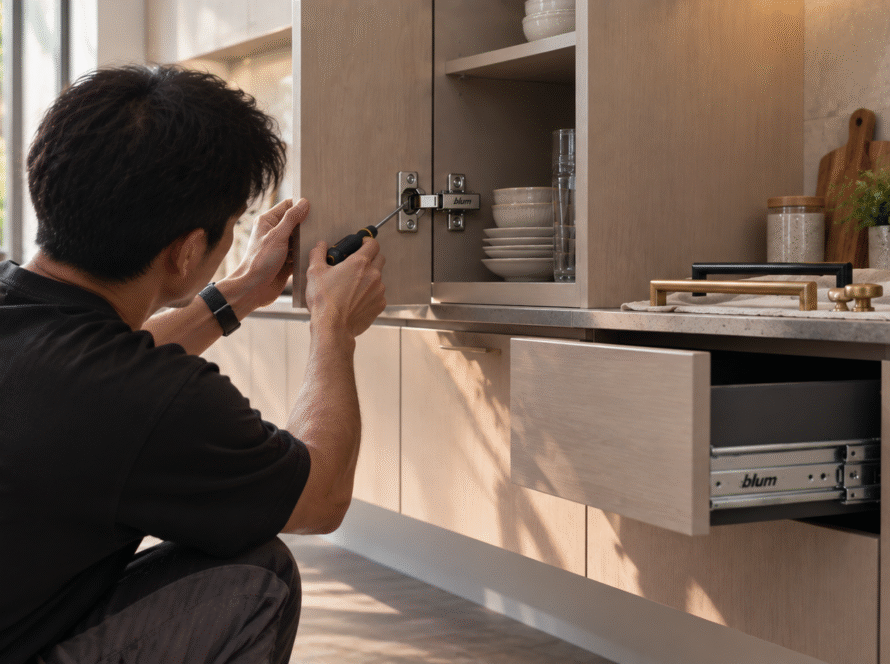
This is one of those questions almost every Malaysian homeowner asks at some point. It usually starts with a few saved photos — one looks clean and modern, another feels warmer and more classic. Both look good, so it becomes hard to choose. But after working on kitchens for years, the decision is rarely just about which one looks nicer.
It is about what you can actually live with comfortably — especially in a Malaysian kitchen where cooking is not exactly light. Heat, oil, and daily use will change how your kitchen feels over time. So instead of looking at this from a purely aesthetic angle, it helps to look at how each style behaves in real life.
- Modern flat-panel cabinets are easier to clean and maintain — a real advantage in Malaysian kitchens where oil and heat are part of daily cooking.
- Modern designs suit smaller kitchens by reducing visual clutter, while classic cabinets work better in larger spaces where details can stand out.
- Classic kitchens create a warmer, more inviting atmosphere — modern kitchens feel clean and minimal but can feel flat if not designed with contrast.
- Classic designs tend to age better over time; modern styles can be more trend-driven depending on execution.
- Material selection, layout planning, and hardware quality have a greater impact on daily usability than design style alone.
- A combination of modern and classic elements often delivers the most practical and visually comfortable result for Malaysian homes.
Modern Kitchen Design — What It Looks Like in Practice
Modern StyleModern kitchens are straightforward. Clean surfaces, minimal detailing, and everything kept quite controlled. A lot of homeowners like this style because it looks neat almost immediately after move-in.
The biggest practical advantage is maintenance. Flat cabinet doors are significantly easier to clean. When you cook often, this becomes very obvious after a few months — there are no grooves for grease to settle into, and a wipe-down takes seconds.
Modern design also works well in smaller kitchens. The simplicity helps the space feel less tight and more open. That said, if everything is too plain, the kitchen can feel flat — lacking depth. This can usually be solved by adding contrast through materials, countertop colour, or a statement backsplash.
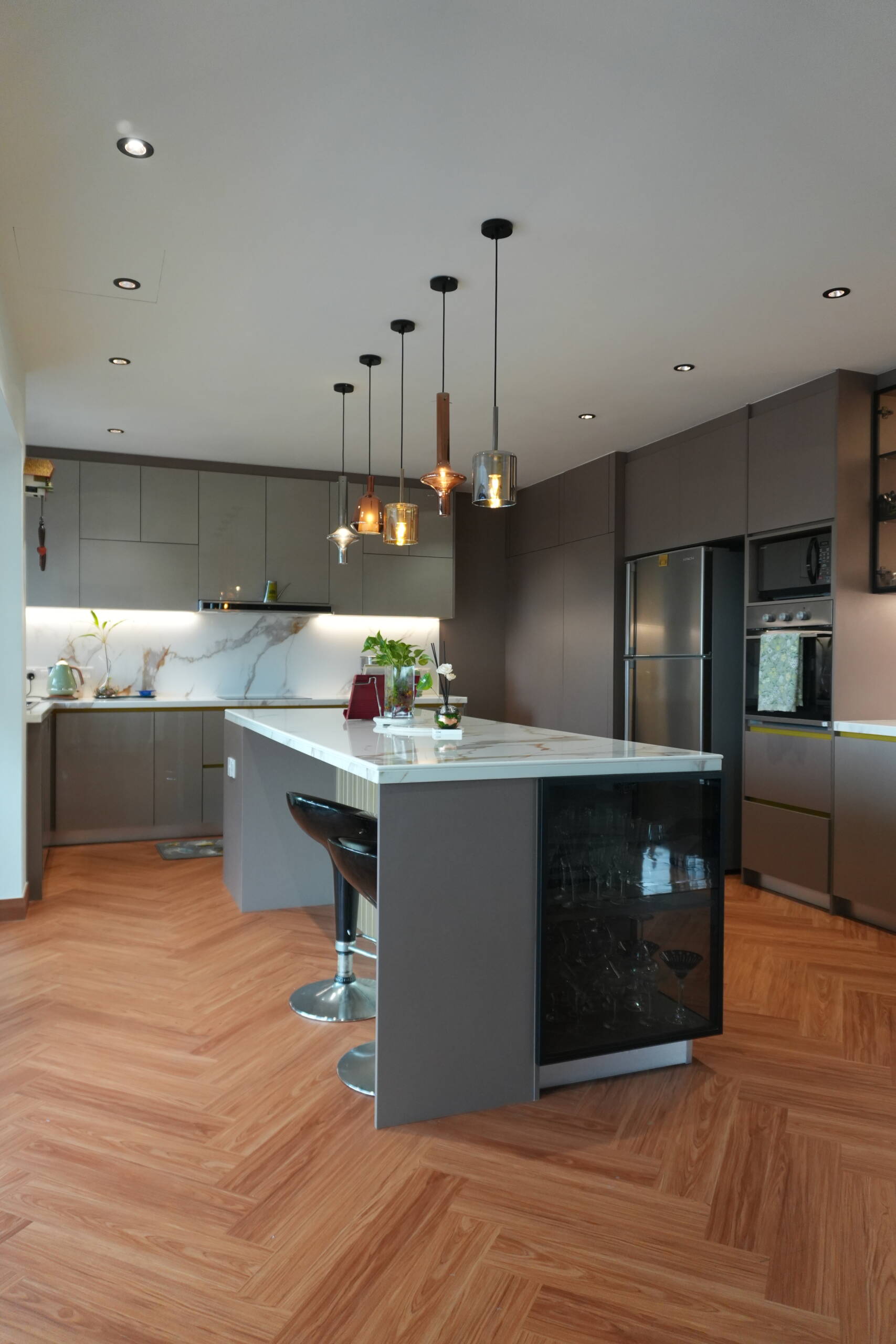
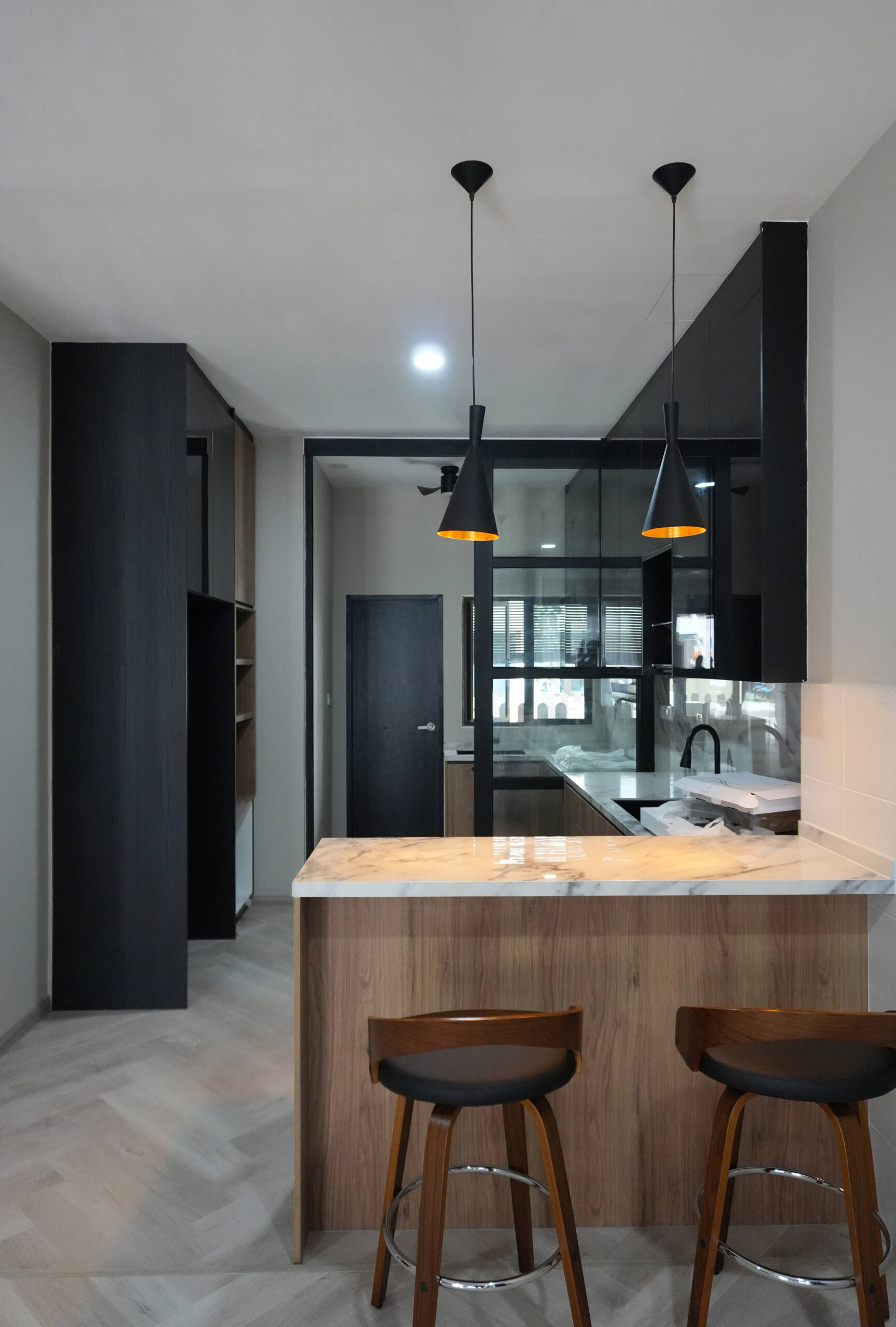
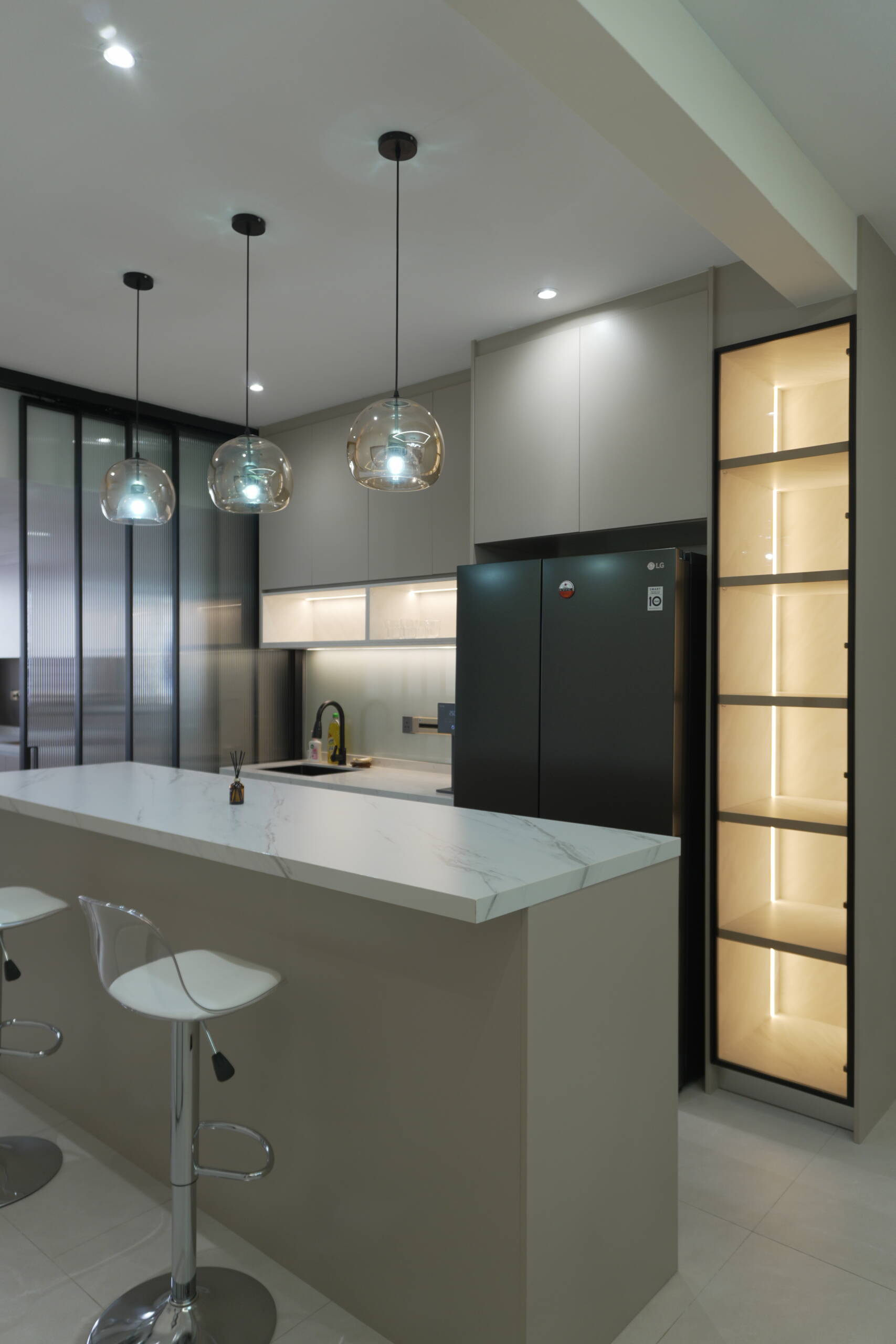
Modern kitchen examples from EverKitchen Portfolio
What Defines the Modern Kitchen Style
- Flat-panel or slab cabinet doors — no grooves or framing
- Handle-less or minimal hardware — push-to-open or J-pull handles
- Neutral colour palette — whites, greys, matte blacks, or warm taupes
- Integrated appliances — built-in oven, concealed fridge panels
- Clean horizontal lines with flush surfaces throughout
- Easiest to clean and maintain in a Malaysian kitchen context
- Makes small and medium kitchens feel larger and more open
- Works seamlessly with open-plan living and dining layouts
- Generally more cost-efficient due to simpler detailing
- Highly compatible with smart appliances and integrated tech
Classic Kitchen Design — What It Looks Like in Practice
Classic StyleClassic kitchens lean more towards detail. You will notice framed or shaker cabinet doors, warmer tones, visible hardware, and slightly more going on visually. The overall feel is softer and more inviting — there is a warmth to it that modern kitchens sometimes lack.
For homeowners who spend a lot of time in the kitchen, or who use the kitchen as a gathering space, this tends to feel more comfortable. It has that lived-in quality that makes a house feel like a home.
But there is something people usually only realise a few months after moving in — those details require more upkeep. In a Malaysian kitchen, grease and dust do not take long to settle into grooves and edges. It is manageable, but it does require more regular effort than a flat modern surface.
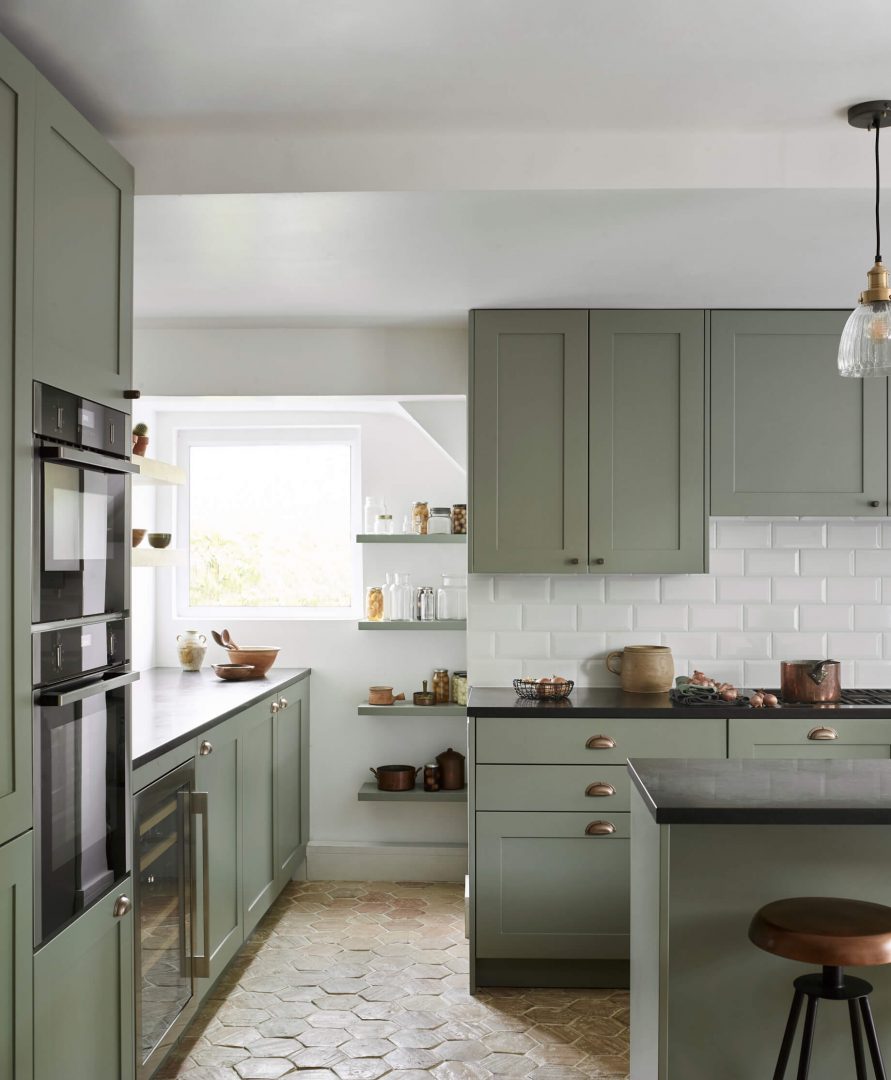
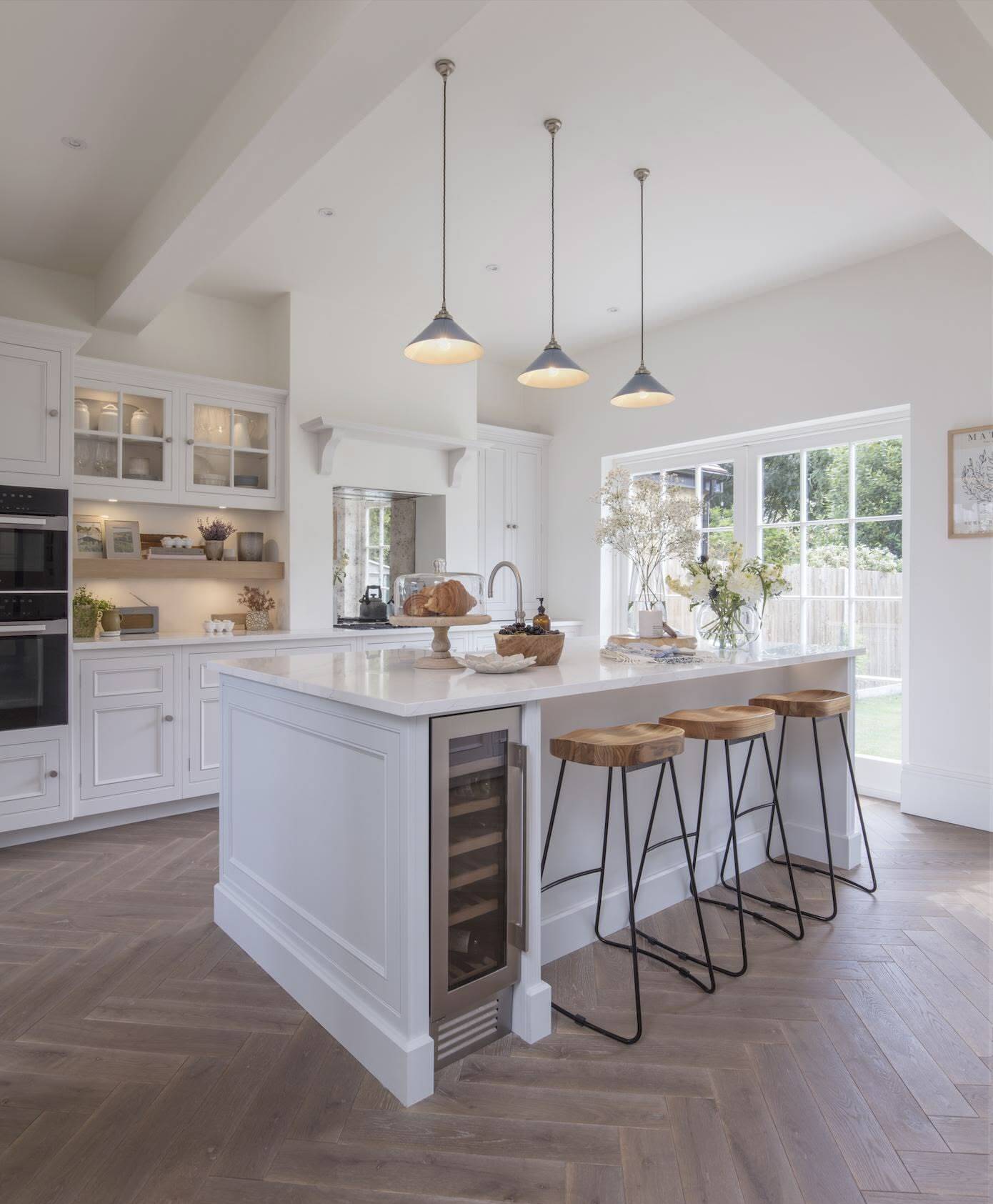
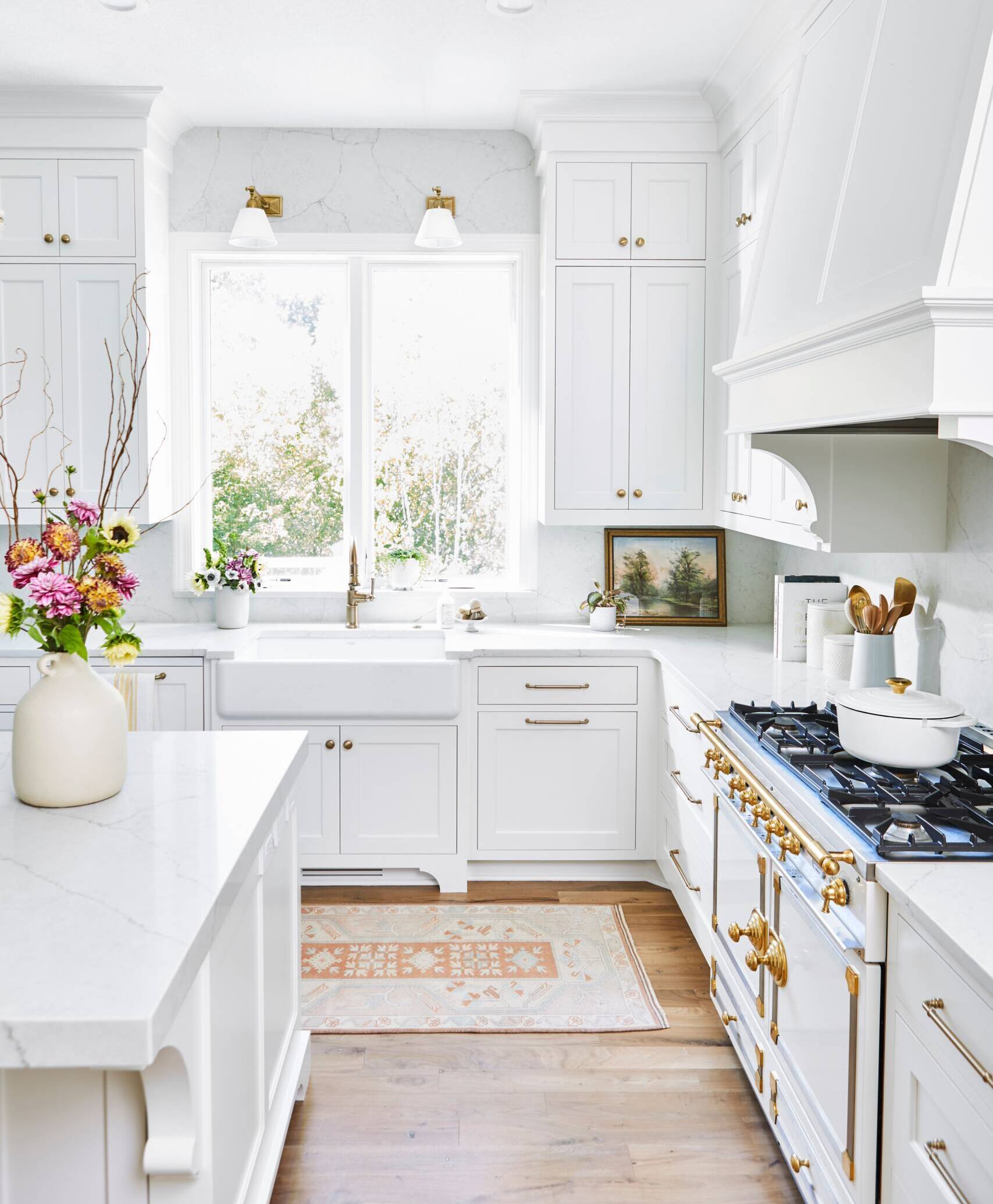
Classic kitchen examples from EverKitchen Portfolio
What Defines the Classic Kitchen Style
- Shaker or raised panel cabinet doors — visible framing and detail
- Decorative hardware — knobs, bar pulls, or cup handles in brass or satin nickel
- Warmer colour palette — cream, sage green, deep navy, or muted earth tones
- Visible moulding, cornice details, or decorative legs on island units
- Natural materials — wood, stone, and tactile finishes throughout
- Timeless — less likely to feel dated as design trends shift
- Creates a warmer, more comfortable atmosphere for families
- Works beautifully in larger kitchens with room to breathe
- Strong visual character — the kitchen feels designed, not just fitted
- Ages gracefully — wood and classic finishes improve with wear
Modern vs Classic — A Side-by-Side Comparison
If we keep things practical, the differences between the two styles are quite clear. Here is an honest, direct comparison across the factors that actually matter for Malaysian homeowners.
| Criteria | Modern Kitchen | Classic Kitchen |
|---|---|---|
| Best For | Condos, smaller kitchens, modern homes | Landed homes, larger kitchens, family spaces |
| Maintenance | ★★★★★ — flat surfaces wipe clean easily | ★★★☆☆ — grooves and details collect grease |
| Visual Style | Clean, minimal, and streamlined | Warm, detailed, and more decorative |
| Space Impact | Makes smaller kitchens feel more open | Can feel heavy if used in tight spaces |
| Design Longevity | ★★★★☆ — can be trend-driven depending on choices | ★★★★★ — timeless and ages well |
| Cabinet Design | Flat panel, handle-less or minimal hardware | Shaker or raised panels with visible handles |
| Atmosphere | Sleek, modern, slightly formal | Cosy, welcoming, and homely |
| Cost Impact | Generally more cost-efficient due to simpler finishes | Can be higher due to detailing and workmanship |
| Main Advantage | Practical, low maintenance, space-efficient | Timeless look with stronger visual character |
| Main Consideration | Can feel flat without contrast in material or colour | Requires more maintenance due to detailed surfaces |
What Actually Makes a Kitchen Work — Beyond the Style
Style is only part of the picture. What makes a bigger difference is everything behind it — materials, structure, hardware quality, and layout.
You can have a very nice looking kitchen, but if the materials are not suitable for humidity, or the layout is not practical, it will become inconvenient quickly. On the other hand, even a simple design can feel very comfortable if it is built with the right approach.
- Material quality — the same shaker door in moisture-resistant plywood vs standard MDF will perform very differently in a Malaysian kitchen after 3 years
- Hardware durability — cheap hinges and runners will fail regardless of how good the cabinet looks; soft-close mechanisms from quality brands last significantly longer
- Layout logic — the kitchen work triangle matters in both styles; a beautiful classic kitchen with a poor layout will frustrate you daily
- Ventilation — especially critical in the wet kitchen zone, regardless of which style you choose
The Balanced Approach — What Most Malaysian Homeowners Actually Do
In reality, very few kitchens are purely modern or purely classic. Most sit somewhere in between — and this is usually where the best outcomes happen.
Common combinations that work well in Malaysian homes:
- Modern layout, classic warmth — flat-panel cabinets in a warm matte finish (sage green, dusty rose, warm grey) with simple bar handles in brushed gold
- Classic doors, modern countertop — shaker-style cabinet doors paired with a sleek sintered stone countertop and integrated sink for easy cleaning
- Modern dry kitchen, classic wet kitchen — clean and minimal in the front-facing space, with warmer and more characterful cabinetry in the enclosed wet kitchen
- Classic base cabinets, open upper shelves — detailed lower cabinets with open shelving above, styled with curated dishware and plants for a lived-in feel
This kind of balance tends to work better, especially for Malaysian homes where practicality and daily comfort matter just as much as appearance.
Budget Consideration: Does Style Affect Price?
Between the two, modern kitchens are generally more straightforward to fabricate, which can make them slightly more cost-efficient. Classic kitchens may involve more detailing — decorative mouldings, panel frames, and specific hardware — which adds to both material and labour costs.
But overall, the difference is not as large as most people expect. Materials and overall kitchen size will still be the primary factors affecting your final budget. A well-designed modern kitchen in premium sintered stone will cost more than a classic kitchen in standard melamine.
For a full breakdown of what drives kitchen renovation costs in Malaysia, read our kitchen interior design price guide.
Still Deciding Between Modern and Classic?
Our team can walk you through both options with reference projects, material samples, and a 3D preview of your space. View our completed portfolio for real examples of both styles.
Chat With Our Experts on WhatsAppFrequently Asked Questions
Which is better — modern or classic kitchen design in Malaysia?
It depends on your lifestyle, space size, and how you use your kitchen. Modern kitchens are easier to maintain and suit smaller homes and condos, while classic kitchens offer a warmer feel and work better in larger landed home spaces. If you cook heavily and frequently, the lower-maintenance nature of modern flat-panel doors is a genuine advantage. If you want a kitchen that feels warm and timeless for years to come, classic design often delivers more character.
Is a modern kitchen cheaper than a classic kitchen?
In most cases, modern kitchens can be slightly more cost-efficient because they use simpler designs with fewer detailing and hardware costs. However, the overall price still depends more on materials, kitchen size, and level of customisation than on style alone. A modern kitchen in premium sintered stone with integrated appliances can cost significantly more than a classic kitchen in standard plywood with melamine doors.
Which kitchen style is more suitable for small kitchens in Malaysia?
Modern kitchen design is generally more suitable for smaller spaces. Clean lines, flat-panel doors, and minimal hardware reduce visual clutter and help the area feel more open and less cramped. Classic kitchens with detailed panels and visible hardware can make a small space feel heavier and more enclosed. If you love the warmth of a classic kitchen but have a smaller space, consider a hybrid approach — clean cabinet forms with warmer colours and minimal hardware.
Are classic kitchen cabinets harder to maintain in Malaysia?
Yes — classic cabinets with grooves, shaker frames, and decorative detailing tend to collect dust and cooking grease more easily than flat modern surfaces. In a Malaysian kitchen where oil, steam, and high heat are part of daily cooking, this becomes noticeable within a few months. It is manageable with regular cleaning, but it does require more effort than a modern flat-panel door, which can be wiped down in seconds.
Can I mix modern and classic elements in one kitchen?
Absolutely — and this is what most Malaysian homeowners end up doing. A common approach is to use clean, flat-panel cabinet forms (modern structure) with warmer colours, natural materials, or decorative handles (classic warmth). Another popular combination is shaker-style doors in the dry kitchen paired with aluminium or stainless steel cabinets in the wet kitchen for practical durability. The key is to pick a consistent colour palette and hardware finish to tie both styles together. Our team can help you explore these combinations with a 3D design preview before any work begins.
Which style is more timeless — modern or classic?
Classic kitchen design generally ages better over time. Shaker doors, natural materials, and warm tones have remained popular for decades and continue to feel relevant regardless of current trends. Modern kitchens can also hold up well — especially well-balanced designs with quality materials — but they are more susceptible to feeling dated if they lean too heavily on specific current trends, such as all-black finishes or ultra-gloss surfaces. A well-executed hybrid approach often delivers the best long-term outcome.