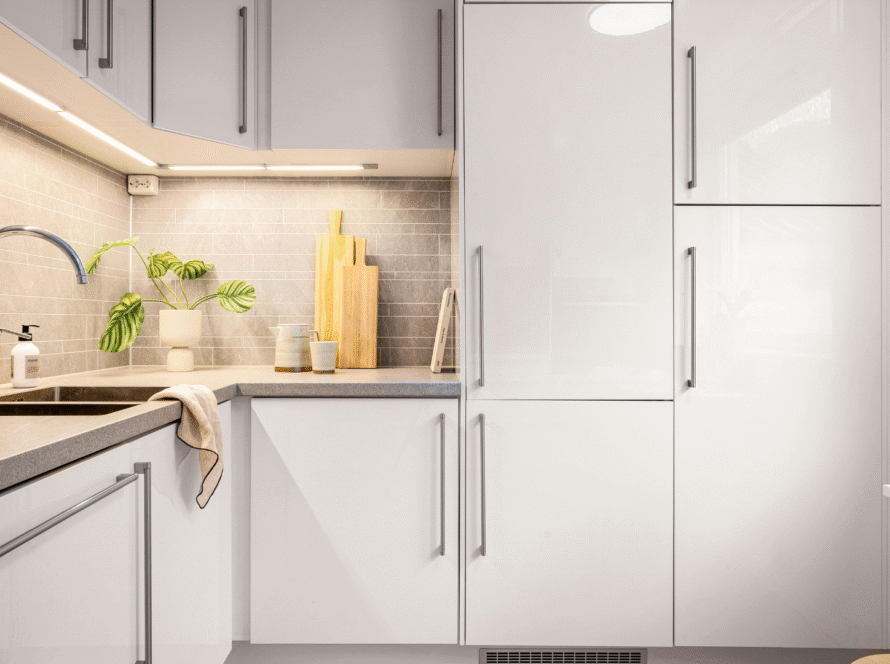
Planning a kitchen renovation in Malaysia? Whether you live in a landed terrace house in Subang Jaya, a semi-D in Damansara, or a high-rise condominium in KL Sentral — your kitchen layout carries more weight than you might think, especially if you follow Feng Shui principles.
For many Malaysian Chinese families, Feng Shui is not superstition. It is a practical philosophy passed down through generations, one that shapes how homes are arranged to invite prosperity, preserve health, and maintain family harmony. And nowhere in the home is this more important than the kitchen. According to renowned Malaysian Feng Shui master Dato' Joey Yap in an interview with Tatler Asia, the kitchen directly correlates to the overall health of the household — making thoughtful kitchen design both a practical and energetic priority.
- The kitchen is one of the most energetically significant rooms in Feng Shui — it governs wealth, health, and family harmony.
- Kitchen placement Feng Shui recommends avoiding the centre of the home, as this concentrates fire energy and can disturb household balance.
- Feng shui kitchen direction matters: south or southeast-facing kitchens are generally considered auspicious for prosperity.
- The fire-water conflict between the stove and sink is the most important spatial relationship to manage in your kitchen.
- Colours, materials, lighting, and storage can all be adjusted to support or correct Feng Shui in any kitchen layout.
- Malaysian homeowners can apply Feng Shui without sacrificing modern functionality or aesthetics.
- Working with a kitchen specialist who understands local spatial constraints makes Feng Shui-compliant design more achievable.
Why the Kitchen Holds Special Significance in Feng Shui
In classical Feng Shui theory, the kitchen represents two of the most critical life areas: wealth and health. The stove, in particular, is associated with the fire element — a symbol of nourishment, abundance, and the energy that sustains a family.
Ancient texts like the Yang Zhai San Yao (三要 — Three Essentials of Yang Dwelling) rank the kitchen among the three most important spaces in a home, alongside the main door and the master bedroom. This is why seasoned Feng Shui practitioners scrutinise kitchen placement Feng Shui so carefully before giving any home a clean bill of energetic health.
The Kitchen as the Wealth Corner of Your Home
The stove represents the family's livelihood. A well-placed, well-maintained stove is believed to support financial stability. In modern Malaysian homes, this philosophy aligns surprisingly well with practical kitchen interior design: a clean, well-organised, properly lit cooking space genuinely does improve daily life.
Health, Food, and the Five Elements
In five-element theory (Wood, Fire, Earth, Metal, Water), the kitchen is where fire and water — two opposing forces — must be carefully balanced. The stove (Fire) and sink or refrigerator (Water) represent this tension. Poor placement of these elements is said to create conflict energy, contributing to health problems, financial instability, or relationship friction within the household.
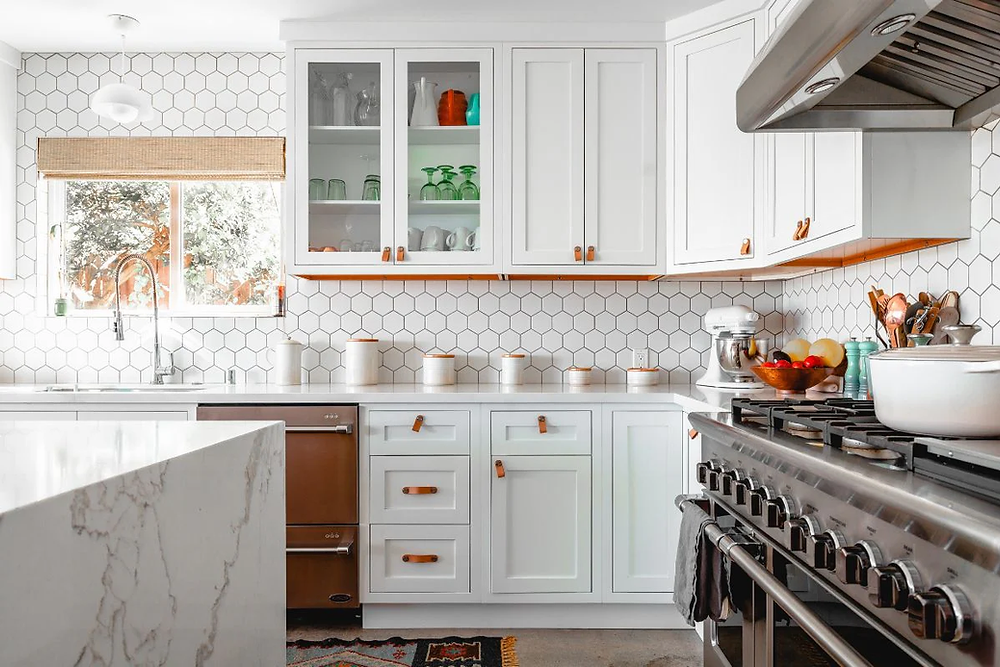
Key Feng Shui Kitchen Direction Principles
One of the most common questions Malaysian homeowners ask is: which direction should my kitchen face? The answer involves both classical guidelines and your home's unique orientation.
Auspicious Directions for the Kitchen
- Southeast — governs Wood element, associated with wealth and abundance
- South — strong Yang energy, ideal for active households
- East — supports health and family harmony
- Northwest — Metal clashes with the kitchen's Fire energy
- West — similar Metal element conflict applies
- Centre of home — concentrates fire and disrupts overall qi
Where Should the Kitchen NOT Be Placed?
| Placement | Why It's Problematic | Common in MY Homes? |
|---|---|---|
| Centre of the home | Fire energy at the centre destabilises the entire household's qi | Rare — mostly condo layouts |
| Facing the main door | Dissipates wealth energy outward immediately | Occasional in open-plan layouts |
| Opposite a bathroom | Conflicting water and fire energies facing each other | Common in older terrace homes |
| Adjacent to or below a bedroom | Rising heat and yang energy disrupts restful yin energy | Common in double-storey terraces |
The Stove — The Most Critical Element in Kitchen Feng Shui
If there is one fixture that commands the most attention in kitchen placement Feng Shui, it is the stove. In Feng Shui terms, the stove is treated with the same reverence as the altar or the main door — it is the source of nourishment and the energetic heart of the home.
Stove Placement Rules to Follow
The stove should not be under a window. A window directly above or behind the stove allows the fire energy — and the wealth it represents — to escape. It also creates practical issues: wind can affect open-flame cooking and direct sunlight increases heat in an already warm workspace.
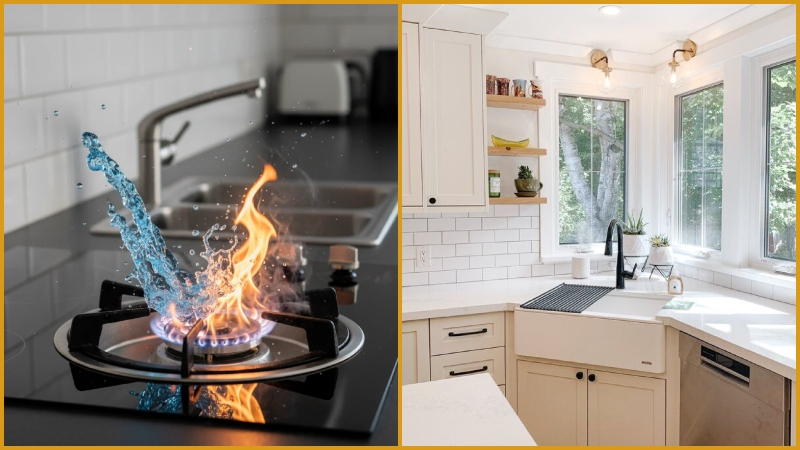
Avoid placing the stove directly beside or facing the sink. This is the classic fire-water conflict in Feng Shui. The standard fix is to introduce an Earth element between them — such as a wooden cutting board station, a countertop in a warm earthy tone, or a solid kitchen island unit.
The stove should not be positioned under a beam. In Feng Shui, beams overhead create downward pressure energy. For the stove — which represents uplift and nourishment — this is considered suppressive.
The Fire vs Water Conflict: Stove and Sink
| Scenario | Feng Shui Impact | Practical Fix |
|---|---|---|
| Stove and sink side-by-side | Moderate conflict | Insert wooden prep station or Earth-tone counter between them |
| Stove directly facing sink | High conflict | Reposition one fixture, or use a full island as a barrier |
| Stove and sink on opposite walls | Acceptable | Ensure adequate counter workflow between the two |
| Stove adjacent to refrigerator | Moderate conflict | Keep refrigerator at end of run, not directly beside the burner |
Feng Shui Kitchen Colours and Materials for Malaysian Homes
Colour is a powerful Feng Shui tool because it introduces elemental energy into a space without major structural changes. For Malaysian homeowners who are renovating, colour and material selection for kitchen cabinets is often the most accessible way to align with Feng Shui principles.
Best Colours for Feng Shui Kitchens
- Warm whites and cream — neutral, clean, safe across all directions
- Earthy tones (terracotta, sandy beige) — Earth element, mediates fire-water conflict
- Warm wood tones — Wood feeds Fire, supports the stove's energy
- Light sage or muted olive — suitable for east or southeast-facing kitchens
- Black or very dark navy — dominant Water, can suppress Fire if overused
- Bright red — intense Fire energy, use as accent only
- Pure white at scale — can feel cold and yin-heavy in an active cooking space
Material Considerations
| Material | Feng Shui Element | Best Used For |
|---|---|---|
| Natural stone (marble, granite) | Earth | Countertops — excellent for grounding and balance |
| Timber cabinetry / laminates | Wood | Cabinetry — widely applicable, suits Malaysian tropical aesthetic |
| Stainless steel appliances | Metal | Appliances only — avoid an all-metal kitchen |
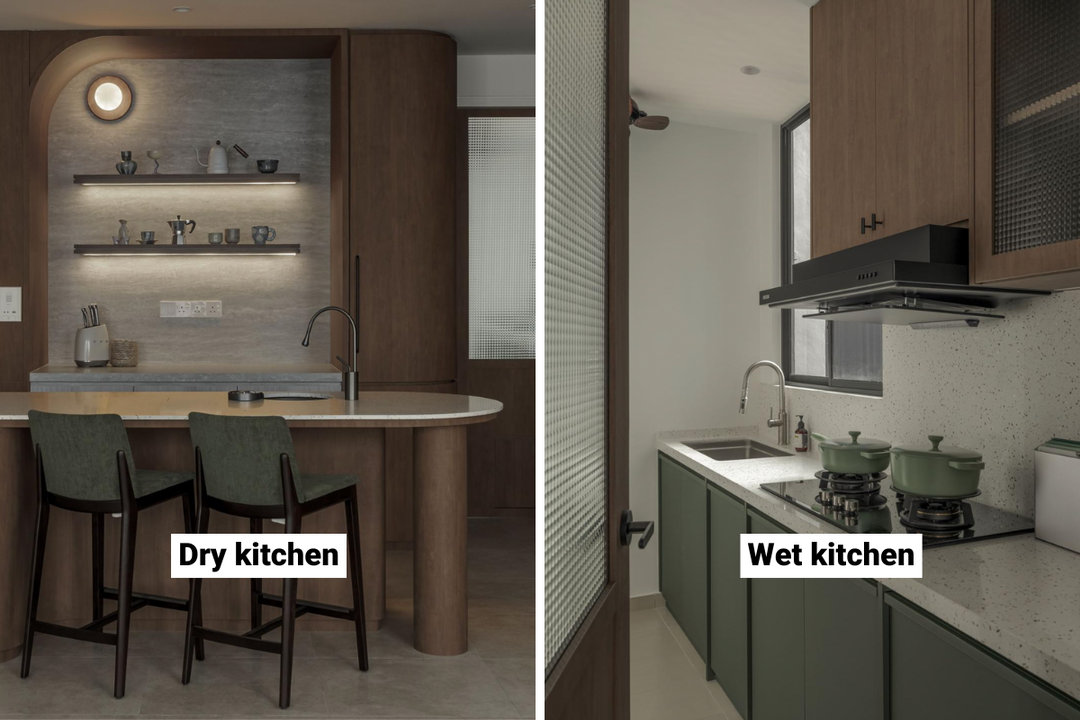
| Quartz or solid surface | Earth | Wet kitchen countertops — durable and energetically grounding |
Adapting Feng Shui to Malaysian Home Layouts
Most Malaysian homes were not designed with Feng Shui as the primary architectural consideration. This means many homeowners are working within layouts that are imperfect from a Feng Shui standpoint — and kitchen renovation is one of the most powerful opportunities to correct this.
Terrace Houses (Single and Double-Storey)
The standard Malaysian terrace house typically places the kitchen at the rear, often in a linear or L-shaped layout. This rear positioning is generally acceptable in Feng Shui. Key areas to address:
- Ensure the stove is not placed directly below the staircase (if present).
- Avoid positioning the stove against the back wall with no natural light — supplement with warm, task-appropriate lighting.
- If the kitchen opens directly to a service yard, consider a half-screen or frosted glass panel to slow the movement of qi through the space.
Condominiums and Serviced Apartments
Urban living in KL and Petaling Jaya presents unique challenges. Condominium kitchens are often small, enclosed, and adjacent to bathrooms due to shared plumbing stacks. In these cases, Feng Shui remedies are primarily decorative and spatial.
Open-Plan Kitchens (Modern Designs)
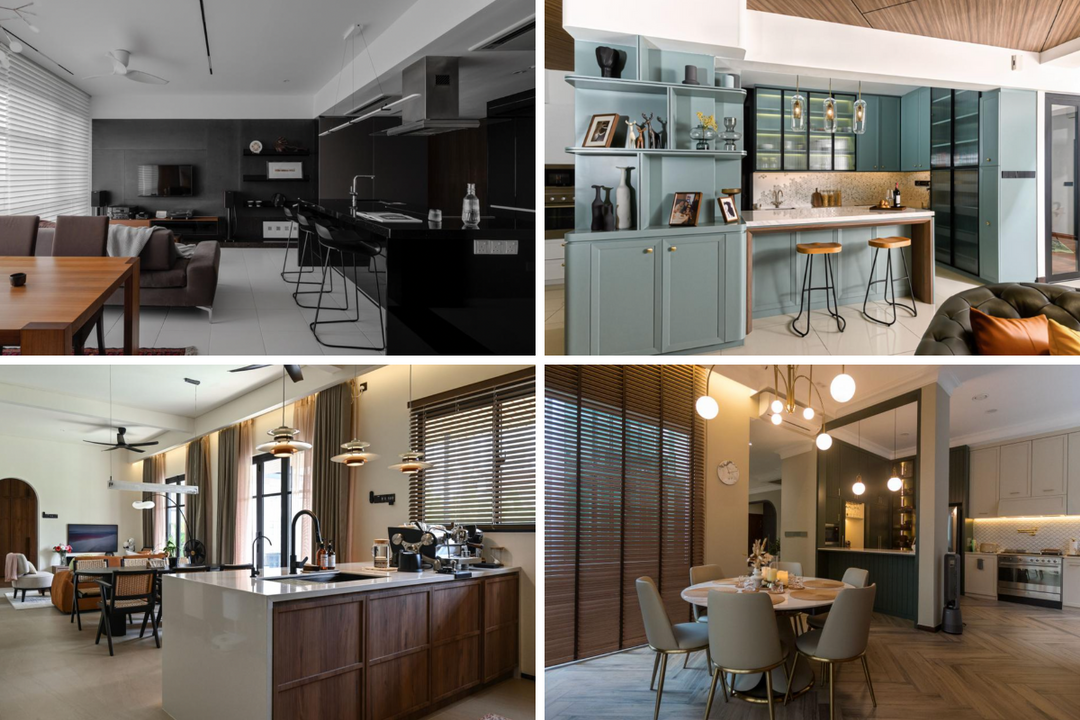
Open-plan kitchen-living-dining layouts are increasingly popular in Malaysian new developments. The key Feng Shui concern is that the stove becomes visible from the main living area and front door. Practical solutions:
- Position the kitchen island or peninsula as a visual and energetic buffer between the cooking zone and the living area.
- Use pendant lighting above the island to define the kitchen zone and anchor its energy.
- Choose flush-close built-in cabinetry — a tidy, contained cooking zone is far more aligned with Feng Shui principles than an open, cluttered one.
Practical Feng Shui Adjustments You Can Make During Renovation
Not every Feng Shui principle requires a major structural overhaul. Many of the most effective adjustments can be built into your renovation planning from the start.
| Design Choice | Feng Shui Benefit |
|---|---|
| Warm under-cabinet LED lighting | Energises the cooking zone, supports Yang energy |
| Full-height cabinetry with clean closures | Contains and organises qi, reduces visual clutter |
| Integrated appliances (hidden fridge panels) | Reduces Metal element dominance |
| Wooden or stone countertops | Earth element grounding between Fire and Water fixtures |
| Rounded cabinet edges where possible | Reduces "sha qi" — cutting energy from sharp corners |
| Strong ventilation and cooker hood | Prevents grease build-up, maintains active qi circulation |
Ready to Plan Your Kitchen Renovation?
Our team works with Malaysian homeowners across Klang Valley, Seremban, and Johor Bahru to design kitchens that are beautiful, practical, and culturally aligned. View our portfolio or get in touch today.
Chat With Our Experts on WhatsAppFrequently Asked Questions
What is the best direction for a kitchen in Feng Shui?
Generally, southeast and south-facing kitchens are considered most auspicious in classical Feng Shui. The ideal direction also depends on your personal Kua number and the overall facing direction of your home. If a directional assessment is important to you, consider consulting a qualified Feng Shui practitioner alongside your kitchen design specialist.
Can I have an open-plan kitchen and still follow Feng Shui?
Yes. The key is to manage the visibility of the stove from the front door and to separate the cooking zone energetically using an island, peninsula, or partial partition. Good lighting, clean organisation, and well-chosen materials all support Feng Shui in open-plan kitchens. See how Malaysian landed homes handle open-plan kitchen layouts in our design guide.
What happens if my stove and sink are next to each other?
This represents the fire-water conflict in Feng Shui. While it is not ideal, it is extremely common in modern kitchens. The standard remedy is to introduce an Earth element between them — a wooden prep station, a warm-toned countertop section, or a small potted herb plant placed between the two fixtures. Read more about balancing stove and sink placement according to Feng Shui principles.
Is a black kitchen bad for Feng Shui?
Not necessarily, but it requires careful management. Black is associated with the Water element, which can suppress the Fire energy of the stove if used excessively. If you love a dark kitchen aesthetic, balance it with warm wood tones, good task lighting, and warm-coloured countertops. Browse our kitchen cabinet packages for dark and earthy tone options.
Does Feng Shui apply to modern minimalist kitchens?
Absolutely. Many core Feng Shui principles — clear pathways, uncluttered surfaces, good ventilation, balanced light — align perfectly with minimalist design philosophy. A clean, minimal kitchen is often more Feng Shui-compliant than a cluttered traditional one. Check out our built-in vs custom kitchen cabinet guide for minimalist-friendly options.
Can I improve my kitchen's Feng Shui without a full renovation?
Yes. Small but meaningful changes include: replacing a broken stove or leaking tap promptly, decluttering countertops, adding warm LED lighting, placing a wooden cutting board between the stove and sink, and ensuring your kitchen is always clean and well-ventilated. If you are planning a bigger upgrade, our kitchen renovation checklist is a great place to start.
I live in a condominium and cannot change my kitchen's position. What can I do?
Focus on what you can control: stove and sink placement within the existing layout, cabinet and countertop colour and material choices, lighting quality, and organisation. Keeping the kitchen clean, well-lit, and clutter-free is the single most impactful Feng Shui action available to any homeowner, regardless of fixed structural constraints.
Does the colour of my kitchen cabinets matter in Feng Shui?
Yes, colour introduces elemental energy into a space. Warm wood tones (Wood element), earthy beiges and warm whites (Earth element), and soft greens (Wood element) are broadly favourable for kitchens. Heavily dominant black or dark blue cabinetry should be balanced with warmer accents, and intense red should be used sparingly as an accent. Read our full guide on Feng Shui kitchen colours to avoid for more detail.