


Of all the cabinets in a Malaysian kitchen, the one under the sink is the most likely to fail first. It faces water from every direction - drips from wet hands, condensation on cold pipes, slow leaks from the tap connection, cleaning product spills, and Malaysia's persistently high ambient humidity. Most homeowners do not think about this when choosing cabinet materials. Most contractors do not tell them either.
This guide covers which materials actually hold up under a Malaysian kitchen sink, which ones fail and why, and what to specify in your renovation contract to make sure you do not spend money replacing the same cabinet twice. For a full picture of how board materials compare across the whole kitchen, see our complete kitchen cabinet materials guide.
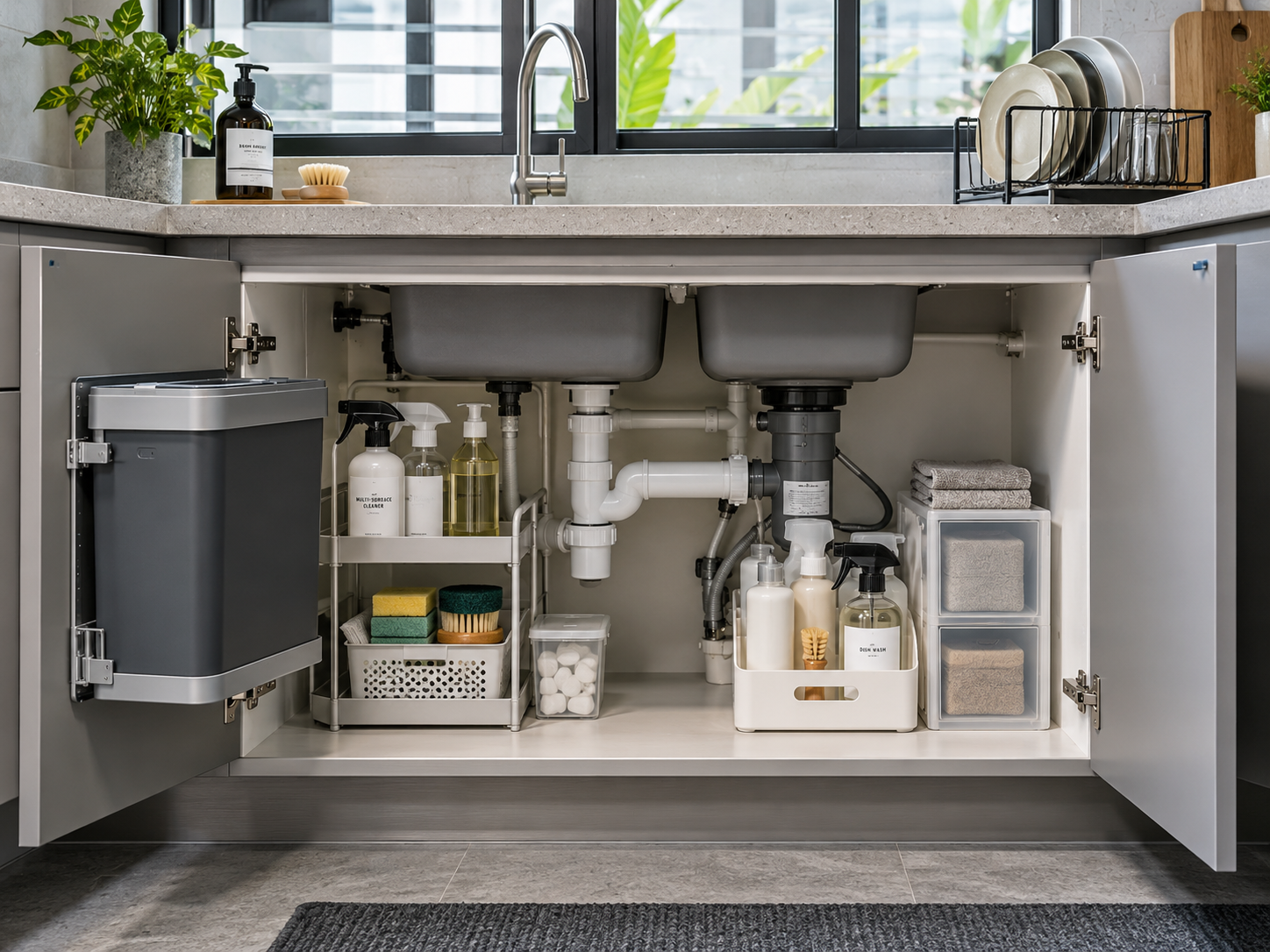
- Aluminium is the waterproof option. It does not absorb water or swell, so the cabinet itself can withstand daily splashes and slow plumbing leaks.
- Moisture-resistant (MR) plywood is a strong wood-based alternative. Its moisture-resistant bonding helps it handle everyday humidity and minor drips, although prolonged leaks can still cause damage.
- Standard plywood is less suitable for under-sink use. Its interior-grade glue is not designed for sustained moisture, which can eventually cause the veneer layers to separate.
- Particle board and standard MDF are vulnerable to water damage. Both can swell when water reaches exposed edges; particle board is particularly prone to permanent damage.
- A waterproof silicone tray adds an extra layer of protection. Placing one on the cabinet base helps catch small drips and spills before they reach the board.
- Specify the under-sink cabinet material separately in your renovation quote. Confirm the material, grade and edge protection rather than assuming the same board is suitable throughout the kitchen.
Why the Under-Sink Cabinet Is the Hardest-Working Cabinet in Your Kitchen
The under-sink cabinet is the most water-exposed zone in any kitchen. It faces daily drips from wet hands, condensation on cold water pipes, potential slow leaks from tap and drain connections, cleaning product spills, and Malaysia's persistently high ambient humidity - all simultaneously. Any board material that is not genuinely moisture-resistant will absorb this accumulated exposure and begin to swell, delaminate, and eventually collapse. This is why under-sink cabinets fail significantly faster than any other cabinet in a Malaysian kitchen.
The pattern is consistent: a homeowner renovates their kitchen, uses the same board material throughout, and notices that the under-sink cabinet is the first one to show problems - a swollen base board, delaminating interior surface, or cabinet floor that has softened and buckled. This is not bad luck. It is the predictable result of using a moisture-sensitive material in the most moisture-intensive location in the kitchen.
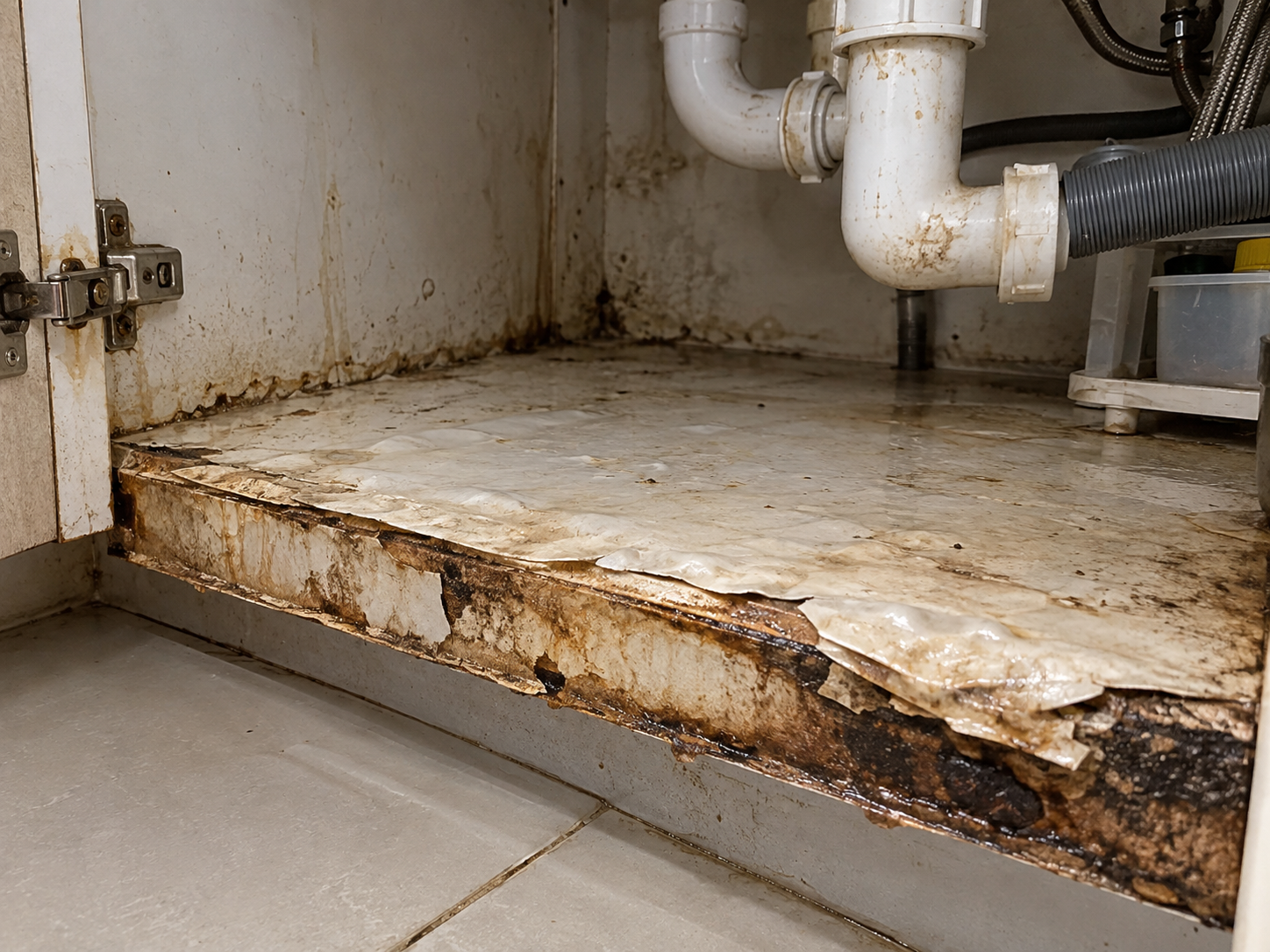
Malaysia's climate amplifies this further. Year-round humidity of 75% to 90% means that even without any visible water exposure, the air inside a closed under-sink cabinet maintains enough moisture to gradually degrade boards that are not genuinely moisture-resistant. Add the real water exposures that happen daily, and the degradation accelerates.
Under-Sink Cabinet Materials Compared - Best to Worst
Aluminium is the only under-sink cabinet material that is genuinely waterproof rather than water-resistant. It does not absorb water at any point - not at edges, not at joints, not through surface damage. A slow plumbing leak that saturates the inside of an aluminium under-sink cabinet does no permanent damage to the cabinet itself. Wipe it out, fix the plumbing, and the cabinet is in the same condition as before.
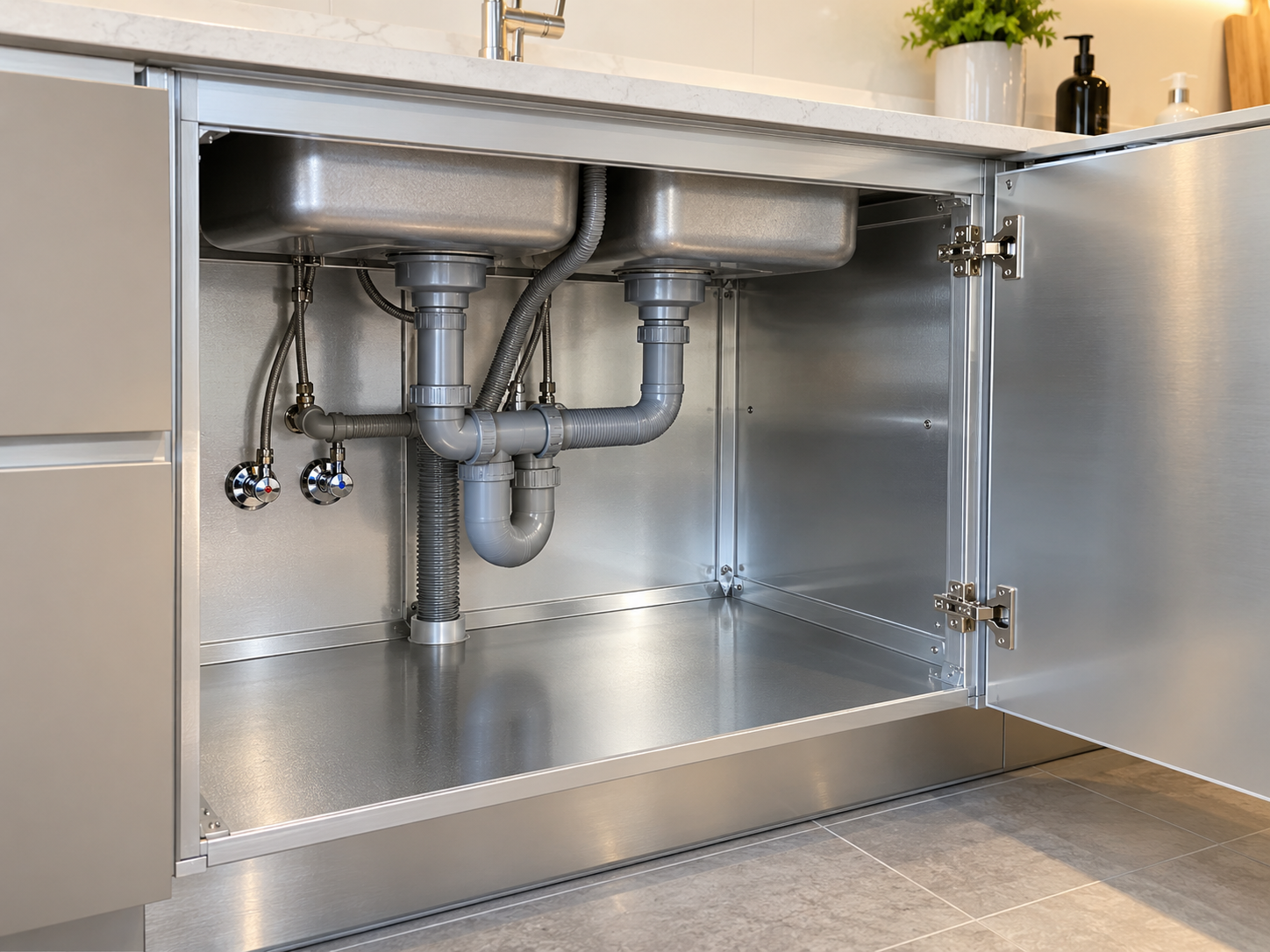
It also does not rust, rot, grow mould, or attract termites - three additional failure modes that affect wood-based materials in Malaysian conditions. The interior of an aluminium cabinet stays cleanable and structurally sound indefinitely. The main objection is cost: aluminium is more expensive than any wood-based alternative, and specifying aluminium for just the under-sink cabinet while using plywood for the rest of the kitchen is not always straightforward with every contractor. Häfele Malaysia and local aluminium cabinet suppliers can advise on available configurations. But for homeowners who have experienced an under-sink cabinet failure and are replacing it, aluminium is almost always the choice the second time around.
Moisture-resistant plywood uses waterproof phenolic or melamine-urea resin glue between its wood veneer layers. This makes the bond between layers significantly more resistant to water penetration than standard plywood or particle board. The cross-grain veneer structure also gives MR plywood inherently better dimensional stability - it is less likely to warp or swell when surface moisture is present.
For daily kitchen water exposure - wet hands reaching under the sink, minor drips, ambient humidity - MR plywood holds up reliably over a 10 to 15 year lifespan when properly sealed and edge-banded. Its limitation compared to aluminium is that it is not truly waterproof - a prolonged slow leak that keeps the cabinet base continuously wet will eventually cause damage. But for well-maintained kitchens with functioning plumbing, MR plywood is the most practical and cost-effective under-sink upgrade over standard particle board. When specifying MR plywood, confirm it carries a moisture-resistant certification - standard plywood sold as "good quality plywood" is not the same product. See our guide on E0 vs E1 cabinet board grades for what else to look for on the board specification.
Standard plywood without moisture-resistant treatment uses interior-grade glue that is not designed for sustained water exposure. It performs better than particle board under a sink because its cross-grain veneer structure resists swelling more effectively - but its bond lines are vulnerable to moisture over time, and prolonged water exposure will cause delamination between veneer layers.
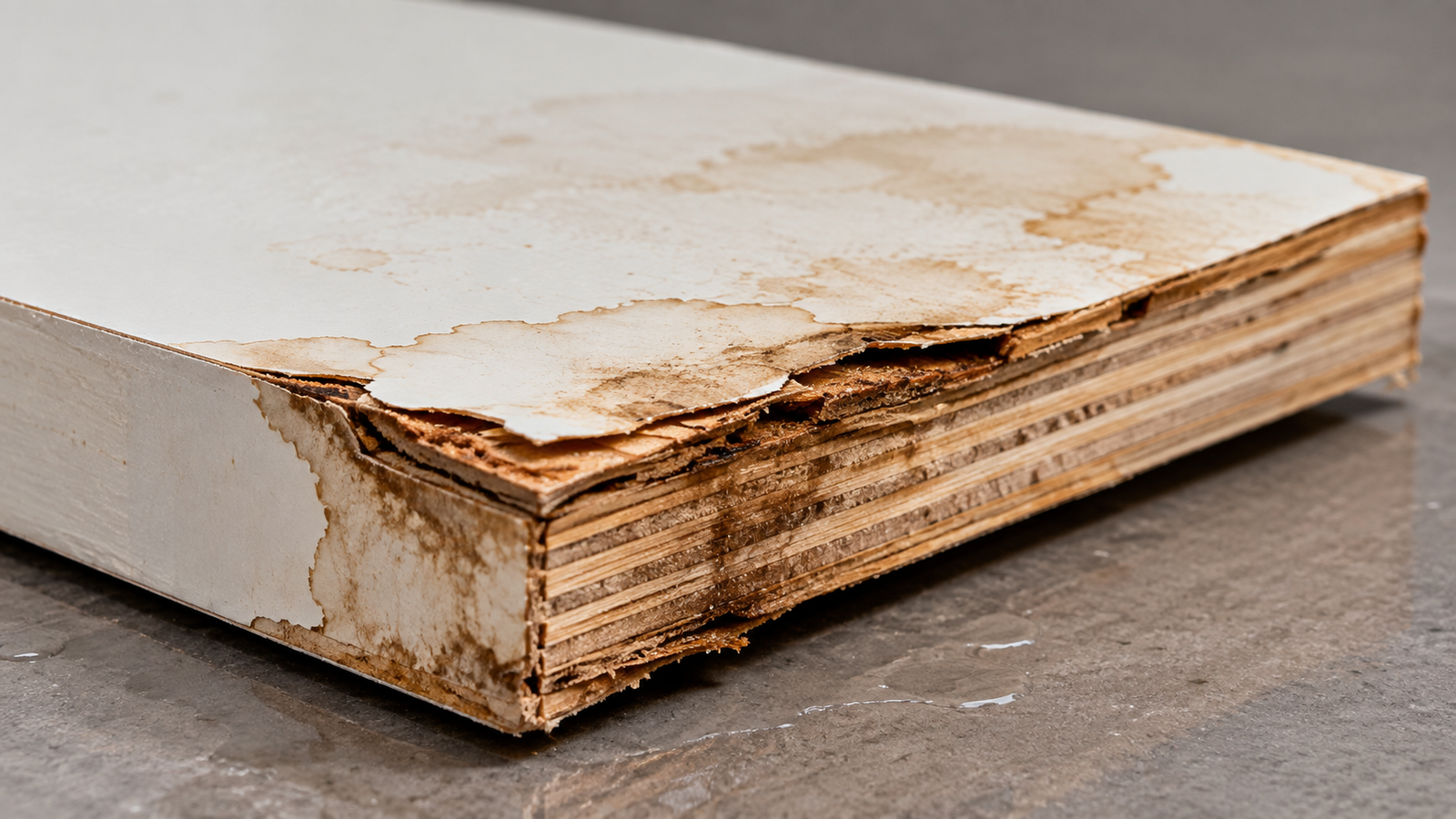
If your contractor is using standard plywood throughout the kitchen and you cannot upgrade to MR plywood for the whole run, at minimum specify that the under-sink cabinet gets MR plywood or aluminium. The cost difference between standard plywood and MR plywood for a single under-sink cabinet is typically RM100 to RM250 - a small amount relative to the cost of replacing a failed cabinet later.
MDF has excellent surface properties - flat, smooth, ideal for painted door panels. But as a carcass material for under-sink use, it performs poorly. MDF has no moisture resistance at its edges, and water at the exposed cut edges causes swelling rapidly - faster than particle board in most cases because MDF's fine fibre structure absorbs water with high surface tension. The base board of an MDF under-sink cabinet exposed to regular drips will swell significantly within 12 to 18 months.
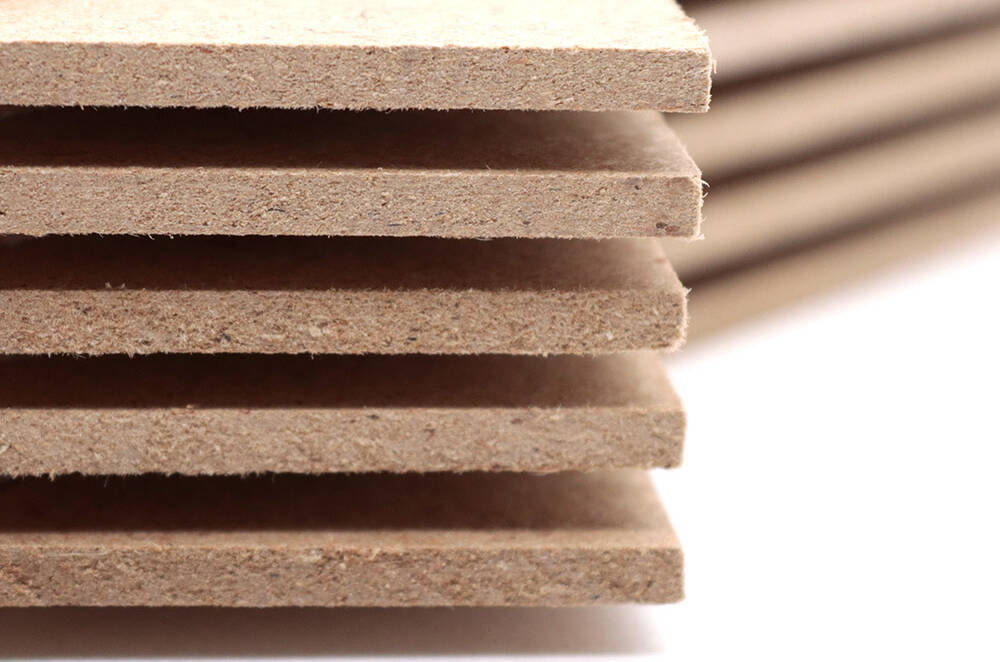
MDF is increasingly used for door panels in Malaysian kitchens, which is appropriate - its smooth surface is ideal for high-gloss and painted finishes. But using MDF for cabinet carcasses under the sink is not appropriate in any Malaysian kitchen, regardless of the finish applied to the exterior surface. The problem is always at the edge and base where water accumulates.
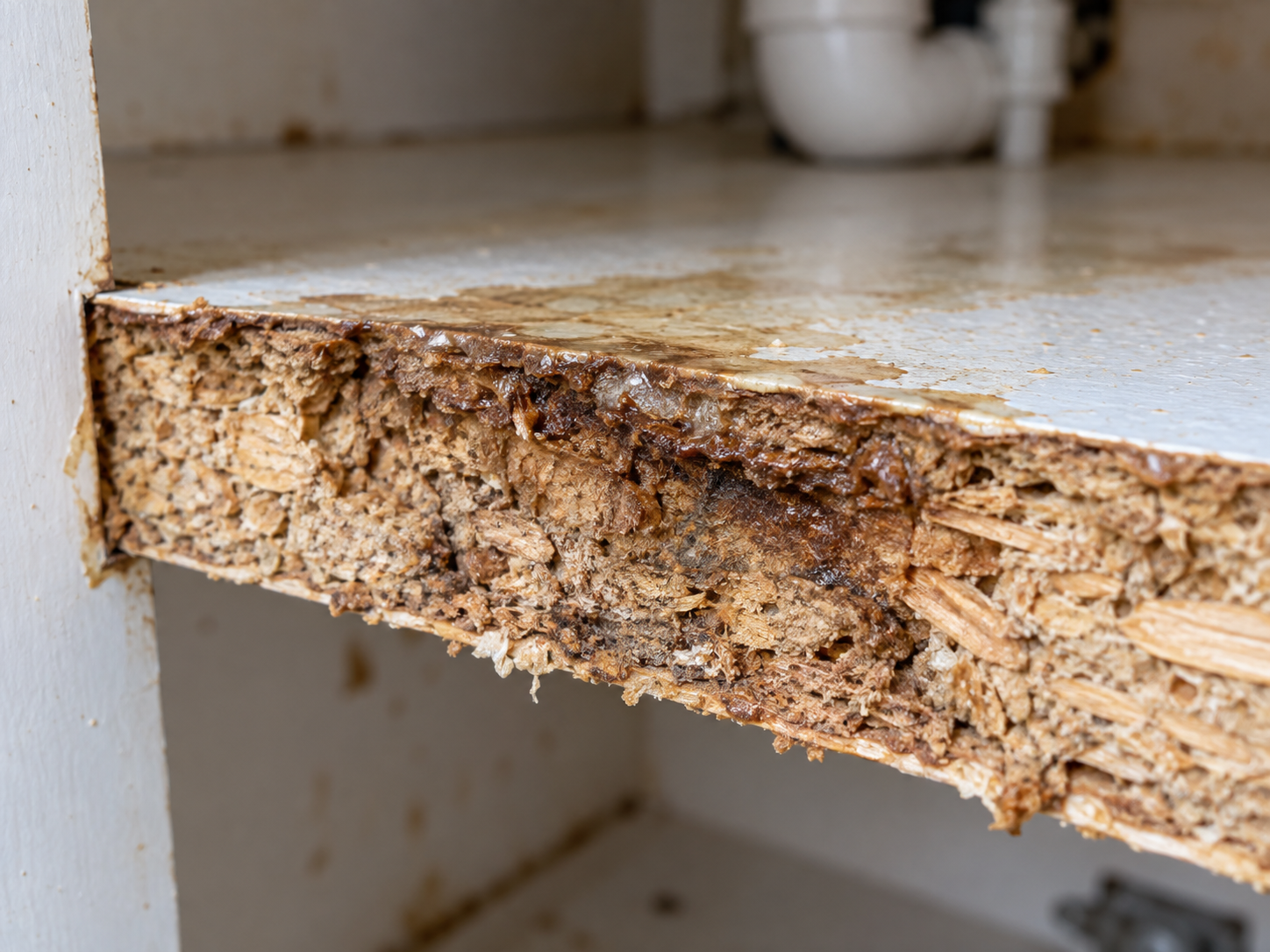
Particle board is the most widely used carcass material in Malaysian kitchen cabinet quotes. It is also the worst possible choice for under-sink use. Particle board is made from wood chips and sawdust bonded with resin - a structure that absorbs moisture rapidly at any exposed edge or surface breach. Once swollen, it cannot return to its original shape. The swelling is permanent and structural - a swollen particle board base cannot bear the weight of items stored on it and will eventually collapse.
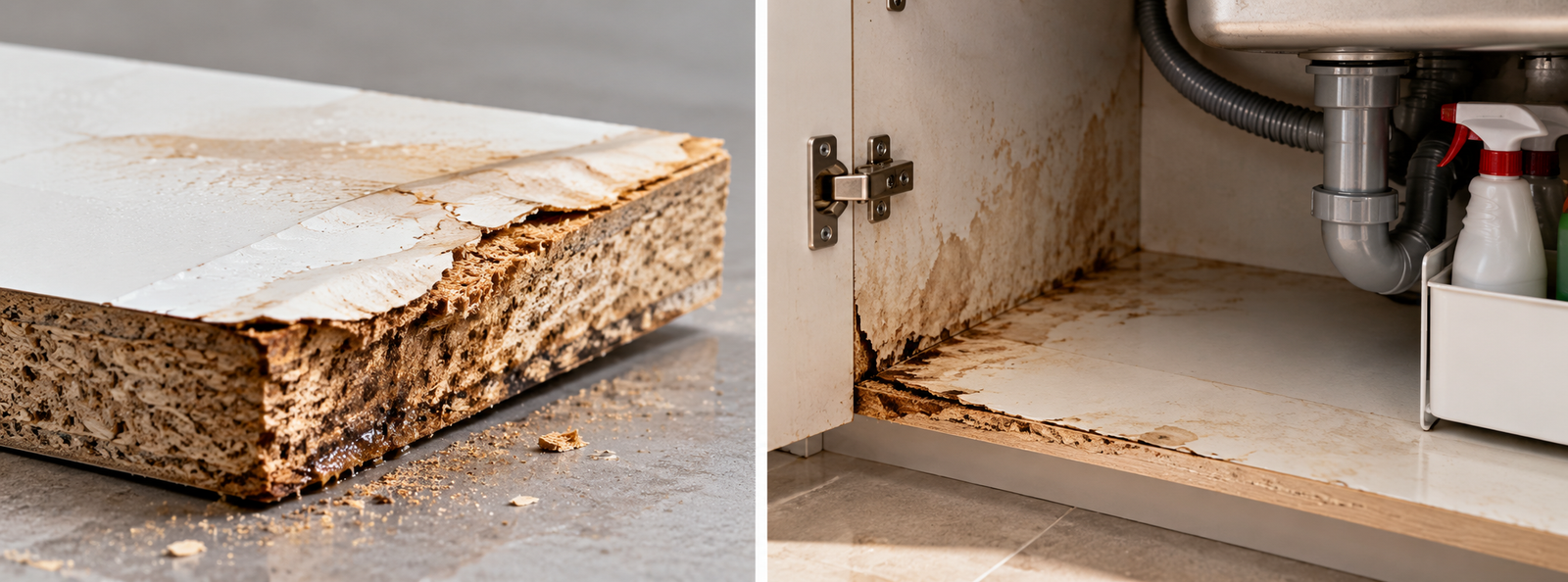
In a Malaysian kitchen under-sink cabinet with normal daily use - no leaks, just normal humidity and minor drips - particle board typically begins to show visible swelling at the base within 3 to 5 years. With any kind of minor plumbing issue, the timeline shrinks to 12 to 24 months. This is the cabinet most homeowners are replacing when they come to us asking why their "brand new kitchen" is falling apart. The answer is almost always particle board under the sink in Malaysia's conditions. For a full comparison of how particle board performs against other materials throughout the kitchen, see our kitchen cabinet materials guide.
Under-Sink Material Comparison at a Glance
| Material | Water Resistance | Handles Slow Leak | Expected Lifespan (MY) | Cost Range | Verdict |
|---|---|---|---|---|---|
| Aluminium | 100% waterproof | ✓ Yes - no damage | 20+ years | RM500-900 / ft | Best choice |
| MR Plywood | High - moisture resistant | ⚠ Limited duration | 12-15 years | RM250-450 / ft | Recommended |
| Standard Plywood | Moderate | ✕ Delamination risk | 7-10 years | RM200-380 / ft | Use with caution |
| MDF | Low - swells at edges | ✕ Rapid swelling | 3-6 years | RM180-350 / ft | Not recommended |
| Particle Board | Very low | ✕ Fails quickly | 3-5 years | RM150-280 / ft | Avoid under sink |
What to Confirm in Your Renovation Contract
The under-sink cabinet material is rarely called out separately in a standard Malaysian kitchen renovation quote. The quote typically says "melamine cabinet" or "18mm board" and applies the same specification to every cabinet in the kitchen - including the one under the sink. Here is what to confirm before signing.
- Ask for the under-sink cabinet carcass material to be specified separately from the rest of the kitchen - by name, grade, and brand. "Moisture-resistant plywood" or "aluminium" should appear on the quote, not just "board."
- Ask whether the edge-banding on the under-sink cabinet is ABS (preferred) or PVC, and confirm it is machine-applied with full coverage on all four edges of every board panel - particularly the base board.
- Ask whether the inside base of the under-sink cabinet is sealed or finished. Raw board edges on the interior floor of the cabinet are the most vulnerable point - they should be covered, sealed, or replaced with a waterproof panel.
- Confirm the plumbing connections - tap and drain - will be checked and tightened after cabinet installation. Loose connections at installation are a common source of slow leaks that are never attributed to the plumber because they develop gradually.
- Ask whether a waterproof interior tray or silicone mat will be installed on the base of the under-sink cabinet. This is a low-cost addition that protects the cabinet floor from minor drips regardless of material.
A contractor who cannot specify what board material goes under your sink - or who says "same material throughout" without knowing what that material is - is not in a position to give you a quality guarantee on cabinet longevity. The material specification should be on the quote. If it is not, ask for it in writing before signing.
Additional Protection Steps Regardless of Cabinet Material
- Install a Waterproof Silicone Tray on the Cabinet Base A silicone drip tray on the floor of the under-sink cabinet catches minor drips and spills before they reach the board surface. Available locally from hardware stores for RM20 to RM80 depending on size. This is the single most cost-effective under-sink cabinet protection regardless of the board material used.
-
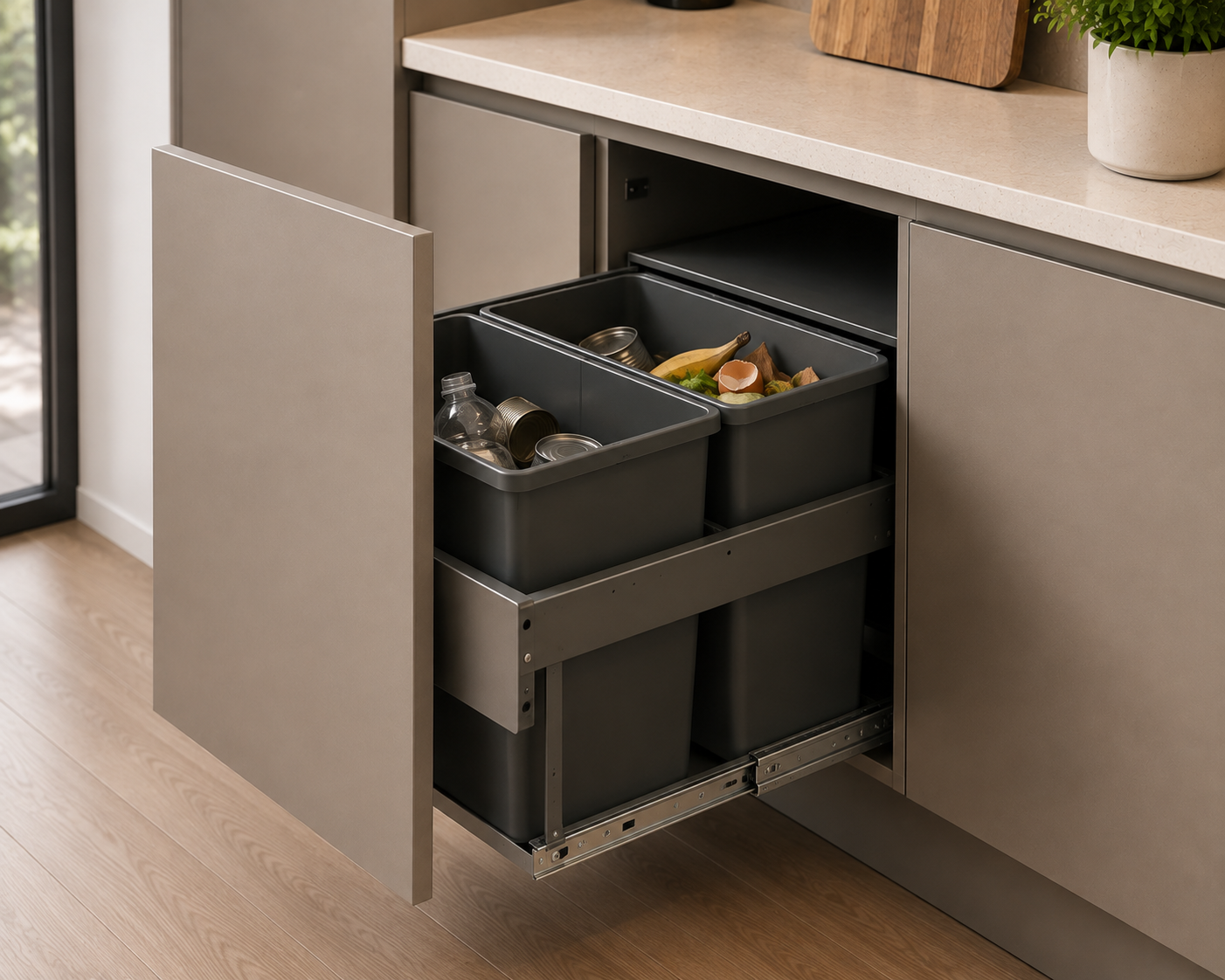
Use a Pull-Out Bin Rather Than a Freestanding Bin Inside
A freestanding rubbish bin placed on the under-sink cabinet floor creates a zone that traps moisture and organic residue, accelerating board degradation at the contact point. A pull-out bin system mounted on the cabinet door keeps waste off the cabinet floor entirely. See our guide on compact kitchen storage ideas for how to configure under-sink storage effectively.
- Check Plumbing Connections Every 6 Months Open the under-sink cabinet and visually inspect the tap and drain connections for any signs of moisture - water stains on the cabinet back or base, discolouration, or soft spots in the board. Catching a slow drip early - before it has saturated the base board - is the difference between a simple plumbing repair and a full cabinet replacement.
- Leave the Cabinet Door Slightly Ajar Periodically In sealed under-sink cabinets, ambient humidity accumulates inside the enclosed space. Leaving the door slightly open when the kitchen is not in use - particularly in the evening or overnight - allows air circulation that reduces the moisture buildup inside the cabinet. This is especially effective in un-air-conditioned kitchens. For more Malaysian kitchen maintenance tips and renovation ideas, Qanvast Malaysia is a useful local reference.
Planning a Kitchen Renovation? Get the Material Specification Right From the Start.
Our team specifies the correct material for every cabinet zone - including under the sink. Visit our showrooms in PJ, Subang Jaya, or Kajang, or speak to us directly on WhatsApp.
Chat With Our TeamFrequently Asked Questions
What is the best material for an under-sink kitchen cabinet in Malaysia?
Aluminium and moisture-resistant (MR) plywood are the two strongest choices. Aluminium is completely waterproof and the only material that handles a slow plumbing leak without permanent damage. MR plywood is the best wood-based option - it uses waterproof glue between veneer layers and handles everyday water exposure significantly better than particle board or standard MDF. Both outperform particle board and standard MDF, which are the most common default materials in Malaysian kitchen cabinet quotes and the most likely to fail under a sink.
Why does the under-sink cabinet fail faster than other kitchen cabinets?
The under-sink cabinet faces water from every direction simultaneously - daily drips from wet hands, condensation on cold water pipes, potential slow leaks from tap and drain connections, cleaning product spills, and Malaysia's persistently high ambient humidity. Any board that is not genuinely moisture-resistant will absorb this accumulated exposure and begin to swell, delaminate, and eventually collapse - typically starting at the base board within 3 to 5 years for particle board under normal Malaysian conditions.
Is particle board under-sink cabinet okay for Malaysian kitchens?
Particle board is not recommended for under-sink cabinets in Malaysia. It is the most moisture-sensitive engineered board available - when water reaches the raw edge or any surface breach, particle board absorbs it rapidly and swells permanently. In a Malaysian kitchen under-sink cabinet with normal daily use, particle board typically begins to show visible swelling at the base within 3 to 5 years. With any minor plumbing issue, the timeline shrinks to 12 to 24 months.
What is moisture-resistant (MR) plywood and is it worth the cost?
Moisture-resistant plywood uses waterproof phenolic or melamine-urea resin glue between the wood veneer layers rather than standard interior-grade glue. This makes the bond significantly more resistant to water penetration, preventing delamination and swelling under normal kitchen water exposure. MR plywood typically costs 20 to 35% more than standard particle board of the same thickness. For the under-sink cabinet specifically, this premium is well justified - a cabinet that lasts 15 years instead of 5 more than recovers the cost difference.
Should I use aluminium or plywood for my under-sink cabinet?
Aluminium is the stronger long-term choice - completely waterproof, unaffected by any level of water exposure, will not swell, rot, or grow mould. MR plywood is a good alternative for homeowners who want a wood-based cabinet or are working within a tighter budget - it handles everyday water exposure well but can be damaged by prolonged exposure from a slow undetected plumbing leak. If budget allows, aluminium for the under-sink zone is the recommendation for Malaysian kitchens with heavy daily cooking and ongoing water exposure.
What should I put inside an under-sink cabinet to protect it from water damage?
Regardless of cabinet material, place a waterproof silicone tray or mat on the base of the under-sink cabinet - this catches drips and spills before they reach the board. Use a pull-out bin system mounted on the cabinet door rather than a freestanding bin on the cabinet floor. Check plumbing connections every 6 months for any signs of moisture. Leave the cabinet door slightly ajar periodically to allow air circulation and reduce humidity buildup inside the enclosed cabinet space.
